By Dr. Richard Nguyen, DO, FACS, FACOS | Board-Certified Surgeon | San Jose & Los Gatos, CA
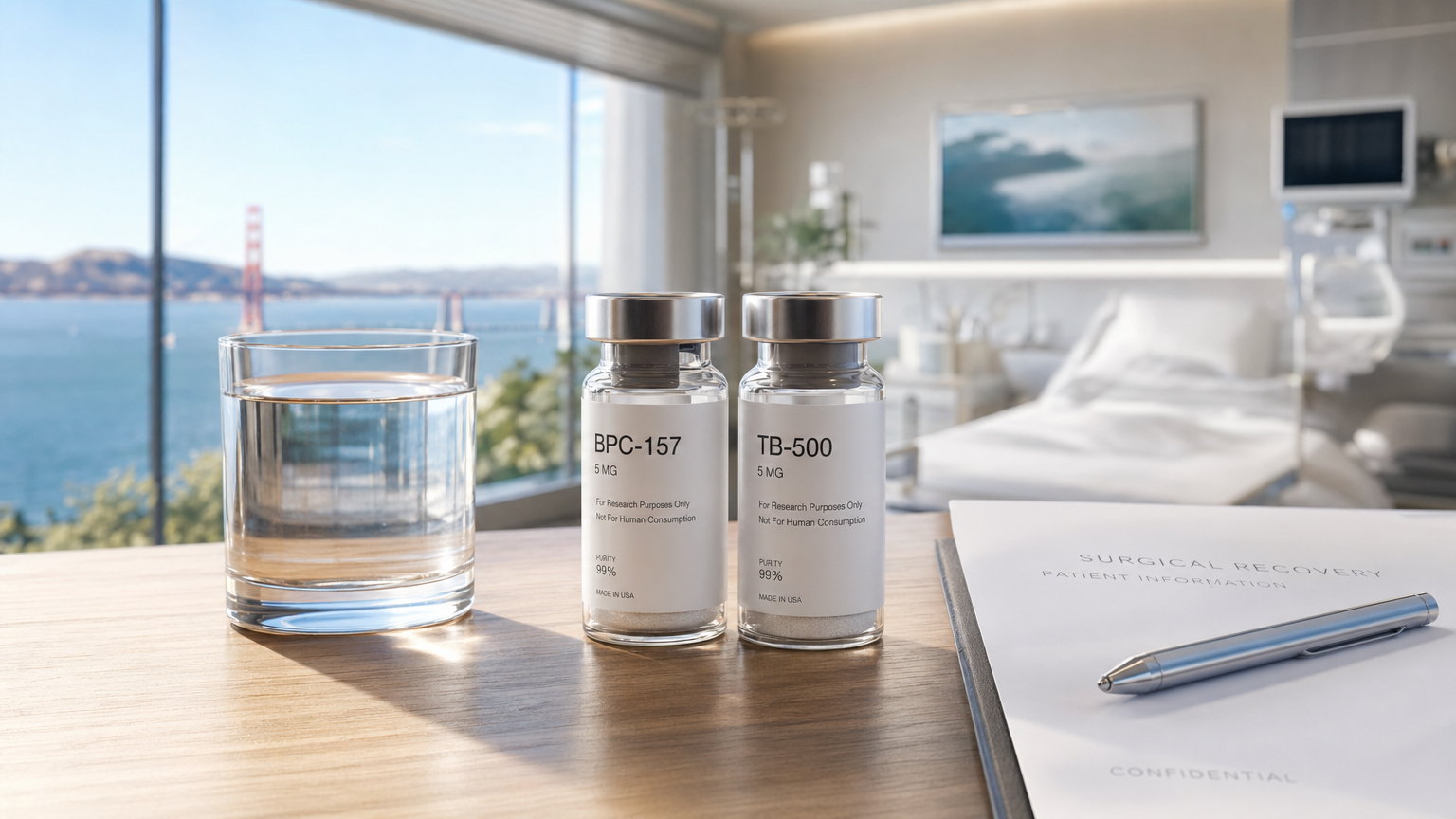
A growing number of patients I see for hernia, gallbladder, and bariatric surgery in San Jose and Los Gatos are already taking a peptide when they walk in: BPC-157, TB-500, a growth-hormone secretagogue, or something they bought online with a label that says "for research use only." Many of them do not mention it, because they assume it is harmless, or because they assume I will lecture them. This post is the pre-operative conversation I wish every one of those patients had with their surgeon. It is not about whether peptides work; our peptide therapy and recovery page covers that. It is about safety in the operating room, and why your surgeon needs the full list.
Before any operation, we review prescription medications, over-the-counter drugs, and supplements for one reason: some of them change how you bleed, how your blood sugar behaves, how you respond to anesthesia, or how your tissue heals. Fish oil, ginkgo, high-dose vitamin E, and NSAIDs are classic examples we routinely ask patients to pause. Peptides belong on that same list, with one important difference: for most of them, we do not have human data telling us what they do in a surgical patient. Unknown is not the same as safe.
"Peptide" covers three very different things, and your surgeon handles each differently:
Some peptides are promoted for their effects on blood vessel growth and blood flow. We do not know how those effects interact with surgical bleeding or with post-operative clot prevention, because it has not been studied in humans. When a drug's effect on bleeding is unknown, the conservative approach is to stop it well before surgery.
Growth-hormone secretagogues and related peptides can raise blood glucose. Elevated glucose around the time of surgery is one of the best-documented risk factors for surgical-site infection. If you are taking anything in this category, we want a glucose or A1c check before your date.
Your anesthesiologist plans around your medication list. Compounds that affect gastric emptying, blood pressure, heart rate, or fluid balance matter. If a compound is not on the list, the plan cannot account for it.
Products sold as research chemicals are not manufactured under pharmaceutical quality control. Independent testing of such products has repeatedly found incorrect doses and contaminants. Injecting an unverified product in the weeks around surgery introduces an infection risk that a fresh surgical wound does not need.
The proposed mechanism of several recovery peptides is stimulating cell growth and new blood vessels. That sounds helpful, but it is not universally desirable, particularly if a patient has a history of cancer or an undetected lesion. This is a theoretical concern precisely because the human studies have not been done. Theoretical concerns are still worth a conversation.
Make the conversation easy for both of us. Bring, or photograph and send ahead:
You will not be judged. I would far rather know about a compound I have reservations about than operate without knowing.
Usually, yes, for unapproved compounds, and the timing depends on what you are taking. In general we ask patients to pause research peptides at least two weeks before surgery and not to restart until the wound has healed and we have discussed it. Approved peptide medications are handled individually: GLP-1 drugs are typically held per anesthesia guidance, and insulin is adjusted rather than stopped. Never stop insulin or another prescribed medication on your own; call us first.
BPC-157 and TB-500 are prohibited in competition by the World Anti-Doping Agency. If you compete in a tested sport, taking them around a surgery does not change that status, and some products have been found to contain undeclared substances. Athletes recovering from a sports hernia repair or another procedure should discuss recovery planning with both their surgeon and their sport's medical staff.
The pre-operative steps with real human evidence are unglamorous: stop smoking, get protein intake up, control blood sugar, correct anemia, and build some conditioning in the weeks before surgery. These are exactly what our Recovery Optimization Program is built on. For patients considering an elective hernia repair or another planned procedure, the weeks before surgery are the highest-leverage window you will get. Individual results vary.
Yes. Unapproved compounds can affect bleeding, blood sugar, anesthesia planning, and infection risk, and their effects in surgical patients have not been studied. Your surgical and anesthesia team can only plan around what they know.
We generally ask patients to stop unapproved peptides at least two weeks before surgery and not restart until cleared. The exact timing depends on the compound and your procedure, so ask us directly.
These approved peptide medications are usually held before surgery per anesthesia guidance because they slow stomach emptying. We will give you specific instructions; do not change dosing on your own.
BPC-157 and TB-500 are prohibited in competition by WADA, and unregulated products may contain undeclared substances. Tested athletes should avoid them and disclose everything to their sport's medical staff.
Peptide, hormone, and longevity services are provided through Lifetime Performance Medicine, the wellness and longevity division of Lifetime Surgical, founded by Dr. Richard Nguyen and located in Los Gatos. If you would like to discuss whether any of these therapies are appropriate for your situation, you can book a consultation with Lifetime Performance Medicine.
Lifetime Performance Medicine is an affiliated practice under the same physician ownership. Any therapy discussed is subject to individual medical evaluation, and not all compounds discussed in this article are FDA-approved. Individual results vary.
Wondering which surgical procedure might be right for your condition? We're here to help you understand your treatment options and develop a personalized surgical plan. Contact our office today to schedule a consultation.
Your path to improved health may be more achievable than you think—with advanced surgical techniques leading to faster recovery, reduced complications, and a significantly enhanced quality of life.
.avif)