When experiencing abdominal bulging or weakness, many patients wonder about the difference between diastasis recti vs hernia surgery. Understanding these conditions is the first step toward finding the right treatment and restoring your core strength and confidence.
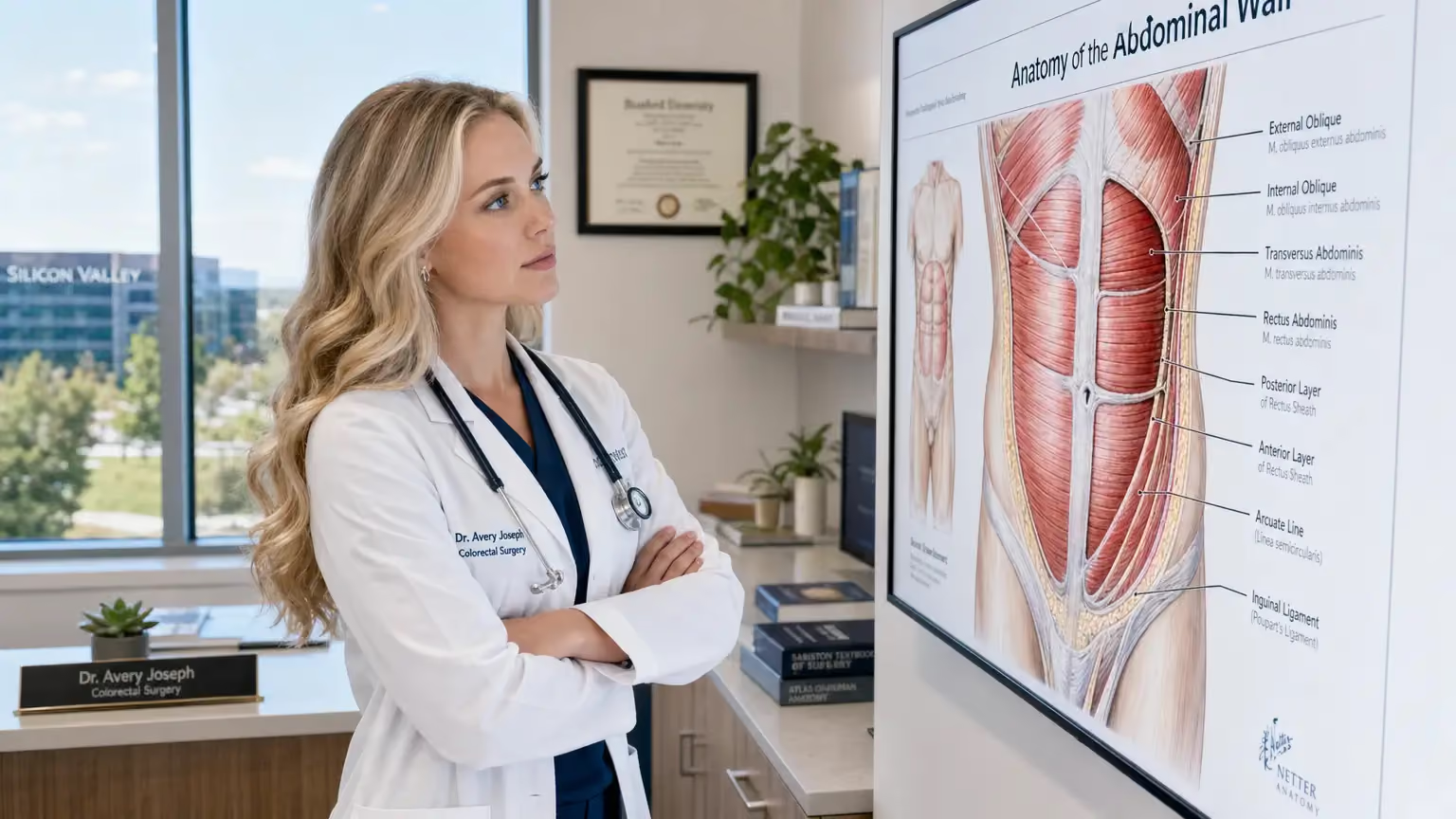
To fully grasp the differences between these two conditions, it is helpful to understand the basic anatomy of the abdominal wall. The rectus abdominis muscles, commonly known as the "six-pack" muscles, run vertically down the front of the abdomen. They are connected by a band of connective tissue called the linea alba.
When the abdominal wall is subjected to significant stress, such as during pregnancy or heavy lifting, the linea alba can stretch and thin out, leading to diastasis recti. Alternatively, if there is a localized weakness or tear in the fascia, an internal organ or tissue can push through, resulting in a hernia.
Both conditions can cause discomfort and affect your quality of life, but they require different diagnostic and treatment approaches. A thorough evaluation by a qualified surgeon is essential to determine the exact nature of your condition and the most appropriate course of action.
Direct Answer: Diastasis recti is the separation of the rectus abdominis muscles, commonly occurring after pregnancy or significant weight changes. Unlike a hernia, it does not involve a tear in the abdominal wall fascia, meaning internal organs are not at risk of protruding through the muscle gap.
This condition often presents as a visible bulge or "pooch" in the middle of the abdomen, especially when straining or sitting up. While it is not typically dangerous, it can cause core weakness, lower back pain, and pelvic floor dysfunction.
Living with diastasis recti can be challenging. Beyond the cosmetic concerns of a protruding abdomen, many patients experience functional issues. The weakened core can lead to poor posture, lower back pain, and pelvic floor dysfunction, including urinary incontinence.
Simple daily activities, such as lifting groceries, picking up children, or even getting out of bed, can become difficult and painful. It is important to recognize these symptoms and seek professional guidance to address the underlying muscle separation and restore core stability.
Direct Answer: A hernia occurs when an internal organ or tissue pushes through a weak spot or tear in the surrounding muscle or connective tissue. This requires medical attention, as the protruding tissue can become trapped or strangulated, leading to severe complications.
Hernias can occur in various parts of the abdomen and groin. Common types include umbilical hernias, inguinal hernias, and incisional hernias. If you suspect a hernia, it is crucial to consult a specialist for an accurate diagnosis and treatment plan.
The primary distinction in diastasis recti vs hernia surgery lies in the structural integrity of the abdominal wall. Diastasis recti is a stretching and thinning of the linea alba (the connective tissue between the abdominal muscles), whereas a hernia involves an actual hole or defect in the fascia.
Because of this fundamental difference, the surgical approaches for each condition vary significantly. A thorough evaluation by an experienced surgeon is necessary to determine the most appropriate course of action.
Accurate diagnosis is the cornerstone of effective treatment. During your consultation, your surgeon will perform a physical examination to assess the integrity of your abdominal wall. They may ask you to perform specific movements, such as a partial sit-up, to evaluate the extent of muscle separation or identify any abnormal bulges.
In some cases, imaging studies, such as an ultrasound or CT scan, may be ordered to provide a more detailed view of the abdominal structures and confirm the presence of a hernia or the severity of diastasis recti. This comprehensive diagnostic approach ensures that your treatment plan is tailored to your specific needs.
For patients with severe diastasis recti that does not improve with physical therapy, surgical intervention may be recommended. The procedure typically involves plication, where the stretched connective tissue is sutured together to tighten the abdominal wall and restore core function.
This repair is often performed in conjunction with other procedures, depending on the patient's individual needs and goals.
Hernia surgery aims to close the defect in the abdominal wall and reinforce the area to prevent recurrence. This can be achieved through various techniques, including open surgery, laparoscopic surgery, or robotic-assisted surgery.
At Lifetime Surgical, we specialize in advanced minimally invasive techniques for hernia repair, ensuring optimal outcomes and faster recovery times for our patients. We also offer comprehensive care for patients considering bariatric surgery.
If surgery is recommended, proper preparation is key to a successful outcome and a smooth recovery. Your surgical team will provide you with detailed instructions on how to prepare for your procedure. This may include guidelines on fasting, adjusting medications, and arranging for transportation and post-operative care.
It is also important to optimize your overall health before surgery. Quitting smoking, maintaining a balanced diet, and engaging in light physical activity can help improve your body's ability to heal and reduce the risk of complications.
Recovery following abdominal surgery requires patience and adherence to your surgeon's instructions. You will likely experience some pain and swelling in the initial days following the procedure, which can be managed with prescribed medications and rest.
Your surgeon will advise you on when it is safe to resume normal activities, including work and exercise. It is crucial to avoid heavy lifting and strenuous activities during the early stages of recovery to protect the surgical repair and ensure optimal healing.
Deciding between treatments for diastasis recti and a hernia requires a personalized approach. During your consultation, we will conduct a comprehensive examination, discuss your symptoms, and review your medical history to develop a tailored treatment plan.
Our goal is to provide you with the highest quality care, utilizing the latest surgical advancements to help you achieve a strong, healthy core.
Understanding the nuances of abdominal wall conditions is essential for making informed decisions about your health. The abdominal wall is a complex structure composed of muscles, fascia, and connective tissue that work together to support your internal organs and facilitate movement. When this structure is compromised, whether through muscle separation or a fascial defect, it can have a profound impact on your overall well-being.
Many patients struggle with the physical and emotional toll of these conditions. The visible changes to the abdomen can affect self-esteem and body image, while the functional limitations can hinder participation in activities you enjoy. It is important to remember that you are not alone, and effective treatments are available to help you regain your strength and confidence.
At Lifetime Surgical, we are dedicated to providing compassionate, patient-centered care. We understand that every patient is unique, and we take the time to listen to your concerns, answer your questions, and develop a personalized treatment plan that aligns with your goals and lifestyle.
Our team of experienced surgeons utilizes the latest advancements in surgical techniques and technology to deliver the highest quality care. We are committed to ongoing education and training to ensure that we remain at the forefront of our field and provide our patients with the most effective and innovative treatments available.
We believe that patient education is a vital component of the healing process. By empowering you with knowledge about your condition and treatment options, we can work together as a team to achieve the best possible outcomes. We encourage you to ask questions, seek clarification, and actively participate in your care.
Whether you are dealing with diastasis recti, a hernia, or a combination of both, we are here to support you every step of the way. From your initial consultation to your post-operative follow-up appointments, our team will provide you with the guidance, care, and encouragement you need to navigate your surgical journey with confidence.
Don't let abdominal wall issues hold you back from living your life to the fullest. Contact Lifetime Surgical today to schedule a consultation and take the first step toward a stronger, healthier you. We look forward to partnering with you on your path to recovery and helping you achieve your health and wellness goals.
Understanding the nuances of abdominal wall conditions is essential for making informed decisions about your health. The abdominal wall is a complex structure composed of muscles, fascia, and connective tissue that work together to support your internal organs and facilitate movement. When this structure is compromised, whether through muscle separation or a fascial defect, it can have a profound impact on your overall well-being.
Many patients struggle with the physical and emotional toll of these conditions. The visible changes to the abdomen can affect self-esteem and body image, while the functional limitations can hinder participation in activities you enjoy. It is important to remember that you are not alone, and effective treatments are available to help you regain your strength and confidence.
At Lifetime Surgical, we are dedicated to providing compassionate, patient-centered care. We understand that every patient is unique, and we take the time to listen to your concerns, answer your questions, and develop a personalized treatment plan that aligns with your goals and lifestyle.
Our team of experienced surgeons utilizes the latest advancements in surgical techniques and technology to deliver the highest quality care. We are committed to ongoing education and training to ensure that we remain at the forefront of our field and provide our patients with the most effective and innovative treatments available.
We believe that patient education is a vital component of the healing process. By empowering you with knowledge about your condition and treatment options, we can work together as a team to achieve the best possible outcomes. We encourage you to ask questions, seek clarification, and actively participate in your care.
Whether you are dealing with diastasis recti, a hernia, or a combination of both, we are here to support you every step of the way. From your initial consultation to your post-operative follow-up appointments, our team will provide you with the guidance, care, and encouragement you need to navigate your surgical journey with confidence.
Don't let abdominal wall issues hold you back from living your life to the fullest. Contact Lifetime Surgical today to schedule a consultation and take the first step toward a stronger, healthier you. We look forward to partnering with you on your path to recovery and helping you achieve your health and wellness goals.
Understanding the nuances of abdominal wall conditions is essential for making informed decisions about your health. The abdominal wall is a complex structure composed of muscles, fascia, and connective tissue that work together to support your internal organs and facilitate movement. When this structure is compromised, whether through muscle separation or a fascial defect, it can have a profound impact on your overall well-being.
Many patients struggle with the physical and emotional toll of these conditions. The visible changes to the abdomen can affect self-esteem and body image, while the functional limitations can hinder participation in activities you enjoy. It is important to remember that you are not alone, and effective treatments are available to help you regain your strength and confidence.
At Lifetime Surgical, we are dedicated to providing compassionate, patient-centered care. We understand that every patient is unique, and we take the time to listen to your concerns, answer your questions, and develop a personalized treatment plan that aligns with your goals and lifestyle.
Our team of experienced surgeons utilizes the latest advancements in surgical techniques and technology to deliver the highest quality care. We are committed to ongoing education and training to ensure that we remain at the forefront of our field and provide our patients with the most effective and innovative treatments available.
We believe that patient education is a vital component of the healing process. By empowering you with knowledge about your condition and treatment options, we can work together as a team to achieve the best possible outcomes. We encourage you to ask questions, seek clarification, and actively participate in your care.
Whether you are dealing with diastasis recti, a hernia, or a combination of both, we are here to support you every step of the way. From your initial consultation to your post-operative follow-up appointments, our team will provide you with the guidance, care, and encouragement you need to navigate your surgical journey with confidence.
Don't let abdominal wall issues hold you back from living your life to the fullest. Contact Lifetime Surgical today to schedule a consultation and take the first step toward a stronger, healthier you. We look forward to partnering with you on your path to recovery and helping you achieve your health and wellness goals.
Yes, it is possible to have both conditions simultaneously. In such cases, a comprehensive surgical approach can address both the muscle separation and the fascial defect during a single operation.
No, surgery is not always required. Many patients experience significant improvement through targeted physical therapy and core-strengthening exercises. Surgery is typically reserved for severe cases that do not respond to conservative treatments.
Recovery times vary depending on the type of hernia and the surgical technique used. Minimally invasive procedures generally offer quicker recovery, with many patients returning to normal activities within a few weeks.
Hernia repair is typically covered by insurance as it is considered a medical necessity. Coverage for diastasis recti repair varies, as it is sometimes deemed a cosmetic procedure. Our team will work with your insurance provider to determine your coverage options.
Wondering which surgical procedure might be right for your condition? We're here to help you understand your treatment options and develop a personalized surgical plan. Contact our office today to schedule a consultation.
Your path to improved health may be more achievable than you think—with advanced surgical techniques leading to faster recovery, reduced complications, and a significantly enhanced quality of life.
.avif)