Published April 30, 2026
By Dr. Avery Joseph, Board-Certified General Surgeon
As a board-certified general surgeon specializing in minimally invasive and robotic surgery at Lifetime Surgical in San Jose, CA, I have witnessed firsthand the incredible evolution of surgical techniques. For decades, hernia repair was performed through large open incisions, leading to significant pain and prolonged recovery times. Then came laparoscopic surgery, which revolutionized the field by using small incisions and a camera. Today, we are in the midst of another surgical revolution: da Vinci robotic hernia repair.
At Lifetime Surgical, we are committed to providing our patients in San Jose, Los Gatos, the South Bay, and the greater Bay Area with the most advanced, effective, and comfortable surgical care possible. That is why we have invested heavily in the da Vinci Xi surgical system. This state-of-the-art technology is transforming how we approach hernia repair, offering unparalleled precision, enhanced visualization, and significantly improved outcomes for our patients.
In this comprehensive guide, I want to take you behind the scenes of da Vinci robotic hernia repair. We will explore exactly how this remarkable system works, the distinct advantages it offers over traditional methods, the types of hernias we can treat robotically, and what you can expect during your recovery. Whether you have recently been diagnosed with a hernia or are exploring your treatment options, my goal is to provide you with the information you need to make an empowered decision about your health.
Before diving into the specifics of robotic surgery, it is important to understand what a hernia is and why it requires medical attention. A hernia occurs when an internal organ or tissue pushes through a weak spot or tear in the surrounding muscle or connective tissue (fascia). This often creates a visible bulge, particularly when you cough, bend over, or lift something heavy.
Hernias do not heal on their own. Over time, they tend to grow larger and become more painful. If left untreated, a hernia can lead to serious complications, such as incarceration (where the herniated tissue becomes trapped and cannot be pushed back in) or strangulation (where the blood supply to the trapped tissue is cut off). Strangulation is a life-threatening medical emergency that requires immediate surgery.
Because of these risks, surgical repair is the only definitive treatment for a hernia. The goal of the surgery is to return the displaced tissue to its proper position and reinforce the weakened abdominal wall, often using a surgical mesh, to prevent the hernia from recurring.
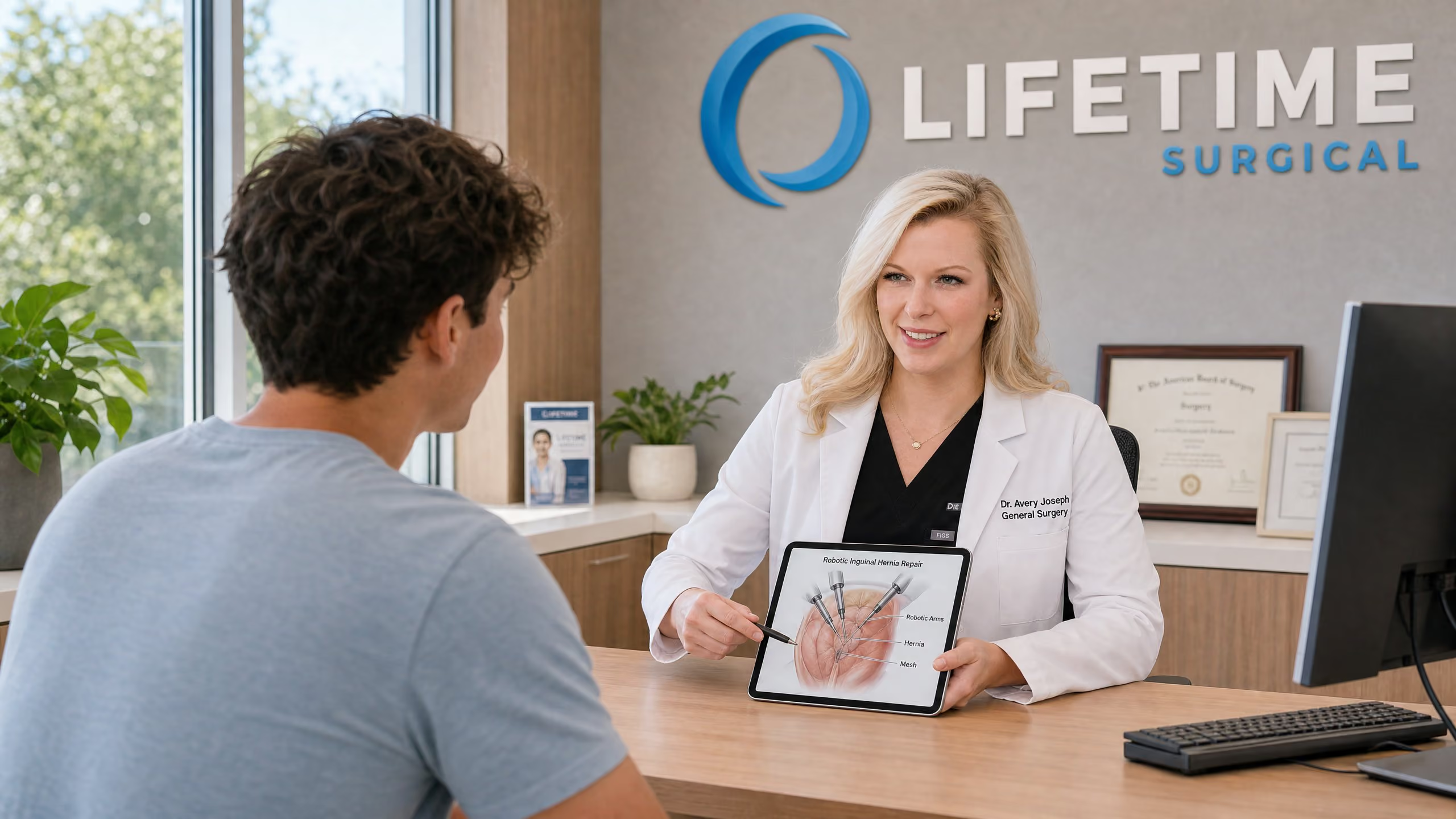
da Vinci robotic hernia repair is a highly advanced form of minimally invasive surgery. It is important to clarify a common misconception: the robot does not perform the surgery autonomously. Instead, the da Vinci system is a sophisticated tool that I, as your surgeon, control completely.
During a robotic hernia repair, I sit at an ergonomic console located in the operating room, just a few feet away from the patient. The console provides me with a high-definition, highly magnified, 3D view of the surgical site inside your body. Using master controls, I manipulate the robotic arms, which are equipped with specialized surgical instruments.
The da Vinci system translates my hand, wrist, and finger movements into precise, real-time movements of the instruments inside the patient. This technology allows for a level of dexterity and control that surpasses both traditional open surgery and standard laparoscopic techniques.
The da Vinci Xi system, which we utilize at Lifetime Surgical, is the latest and most advanced iteration of this technology. It consists of three main components:
The instruments used in the da Vinci system are known as EndoWrist instruments. Unlike standard laparoscopic tools, which are rigid and have limited range of motion, EndoWrist instruments are designed with mechanical wrists that mimic the dexterity of the human hand. They can bend and rotate far beyond the natural limits of the human wrist, allowing me to perform complex maneuvers in tight spaces with incredible precision.
The adoption of the da Vinci system has fundamentally changed the landscape of hernia repair. For patients in the Bay Area seeking the best possible care, robotic surgery offers several compelling advantages:
The combination of 3D high-definition visualization and the articulating EndoWrist instruments provides me with extraordinary precision. I can navigate delicate anatomical structures, such as nerves and blood vessels, with a level of accuracy that is difficult to achieve with other methods. This precision is particularly crucial when dissecting tissue and placing the surgical mesh to reinforce the abdominal wall.
In traditional open surgery, the surgeon's view is limited by the size of the incision. In standard laparoscopy, the view is 2D, which can make depth perception challenging. The da Vinci system's 3D HD camera magnifies the surgical site up to 10 times, providing a remarkably clear and detailed view. This enhanced visualization allows me to identify and address even the smallest anatomical details, ensuring a more thorough and effective repair.
Because robotic hernia repair is performed through a few small incisions (typically less than an inch long), there is significantly less trauma to the abdominal wall muscles compared to open surgery. This translates to less postoperative pain, a reduced need for narcotic pain medication, and a faster return to normal activities.
The precision and minimally invasive nature of robotic surgery contribute to a lower risk of complications, such as surgical site infections and significant blood loss. The ability to meticulously close the defect and securely place the mesh also helps to minimize the risk of hernia recurrence.
One of the most significant benefits for our patients is the accelerated recovery process. Many patients who undergo da Vinci robotic hernia repair at Lifetime Surgical are able to go home the same day. They typically experience less discomfort and can resume their daily routines, including work and light exercise, much sooner than those who undergo traditional open surgery.
The versatility of the da Vinci system allows us to treat a wide variety of hernias. At our San Jose practice, we frequently use robotic surgery for the following types of hernias:
If you are considering da Vinci robotic hernia repair at Lifetime Surgical, here is a general overview of what you can expect throughout your journey:
Your journey begins with a comprehensive consultation at our San Jose office. During this visit, I will review your medical history, perform a physical examination, and discuss your symptoms. We may also order imaging studies, such as an ultrasound or CT scan, to accurately diagnose the size and location of your hernia. I will explain the robotic procedure in detail, answer all your questions, and help you determine if you are a good candidate for this approach.
Once we have decided to proceed with robotic hernia repair, our team will provide you with detailed preoperative instructions. This may include guidelines on fasting, adjusting your medications, and preparing your home for your recovery. We are committed to ensuring you feel fully prepared and comfortable before your surgery date.
On the day of your procedure, you will arrive at the surgical center and meet with our anesthesia team. Robotic hernia repair is performed under general anesthesia, so you will be completely asleep and pain-free during the operation. The surgery typically takes between one and two hours, depending on the complexity of the hernia.
After the surgery, you will be monitored in the recovery room until you are awake and comfortable. Most patients are able to go home the same day. You will have a few small incisions covered with surgical glue or steri-strips. We will provide you with specific postoperative instructions, including pain management strategies and activity restrictions.
While recovery experiences vary, most patients can expect to return to light activities within a few days and resume more strenuous activities, such as heavy lifting or intense exercise, within a few weeks. We will schedule follow-up appointments to monitor your healing progress and ensure a successful outcome.
At Lifetime Surgical, our mission is to provide the highest standard of surgical care to our community in the South Bay and beyond. Investing in the da Vinci Xi system was a natural extension of this commitment. We believe that our patients deserve access to the most advanced, proven technologies available.
The decision to integrate robotic surgery into our practice was driven by the clear, evidence-based benefits it offers. We have seen firsthand how this technology improves surgical precision, reduces patient discomfort, and accelerates recovery times. By offering da Vinci robotic hernia repair, we are empowering our patients to get back to their lives—their families, their careers, and their passions—sooner and with greater confidence.
Furthermore, our expertise in robotic surgery complements our other specialties, including bariatric surgery and minimally invasive procedures. This comprehensive approach allows us to tailor our surgical strategies to the unique needs of each individual patient, ensuring optimal outcomes across a wide range of conditions.
Yes, robotic hernia repair is a safe and highly effective procedure when performed by an experienced, board-certified surgeon. The da Vinci system has been used in millions of surgeries worldwide and has a strong track record of safety and success. The enhanced visualization and precision of the robotic instruments actually help to minimize the risk of complications compared to traditional open surgery.
The duration of a robotic hernia repair varies depending on the size, location, and complexity of the hernia. On average, the procedure takes between one and two hours. During your consultation, I will provide you with a more specific estimate based on your individual case.
No. One of the primary benefits of robotic surgery is that it is minimally invasive. The procedure is performed through a few small incisions, typically less than an inch long. These incisions heal quickly and result in minimal scarring, which is often barely noticeable once fully healed.
Recovery times vary, but most patients who undergo robotic hernia repair can return to desk work or light duty within a few days to a week. If your job involves heavy lifting or strenuous physical activity, you may need to wait several weeks before returning to full duty. We will provide you with personalized guidelines based on your specific situation and the nature of your work.
In most cases, yes. Hernia repair is considered a medically necessary procedure, and most insurance plans cover it, regardless of whether it is performed using open, laparoscopic, or robotic techniques. Our dedicated billing team at Lifetime Surgical will work closely with your insurance provider to verify your coverage and help you understand any out-of-pocket costs.
If you are suffering from a hernia, you do not have to live with the pain and limitations it causes. The advanced da Vinci robotic hernia repair offered at Lifetime Surgical provides a safe, effective, and minimally invasive solution to help you reclaim your health and vitality.
Do not let a hernia hold you back any longer. Contact Lifetime Surgical today to schedule a consultation with me, Dr. Avery Joseph, or my esteemed colleague, Dr. Richard Nguyen. We will carefully evaluate your condition, discuss your treatment options, and develop a personalized surgical plan tailored to your needs.
Call us at 408-850-0176 or visit our contact page to request an appointment. We are proud to serve patients throughout San Jose, Los Gatos, the South Bay, and the entire Bay Area, and we look forward to helping you achieve a successful recovery.
Wondering which surgical procedure might be right for your condition? We're here to help you understand your treatment options and develop a personalized surgical plan. Contact our office today to schedule a consultation.
Your path to improved health may be more achievable than you think—with advanced surgical techniques leading to faster recovery, reduced complications, and a significantly enhanced quality of life.
.avif)