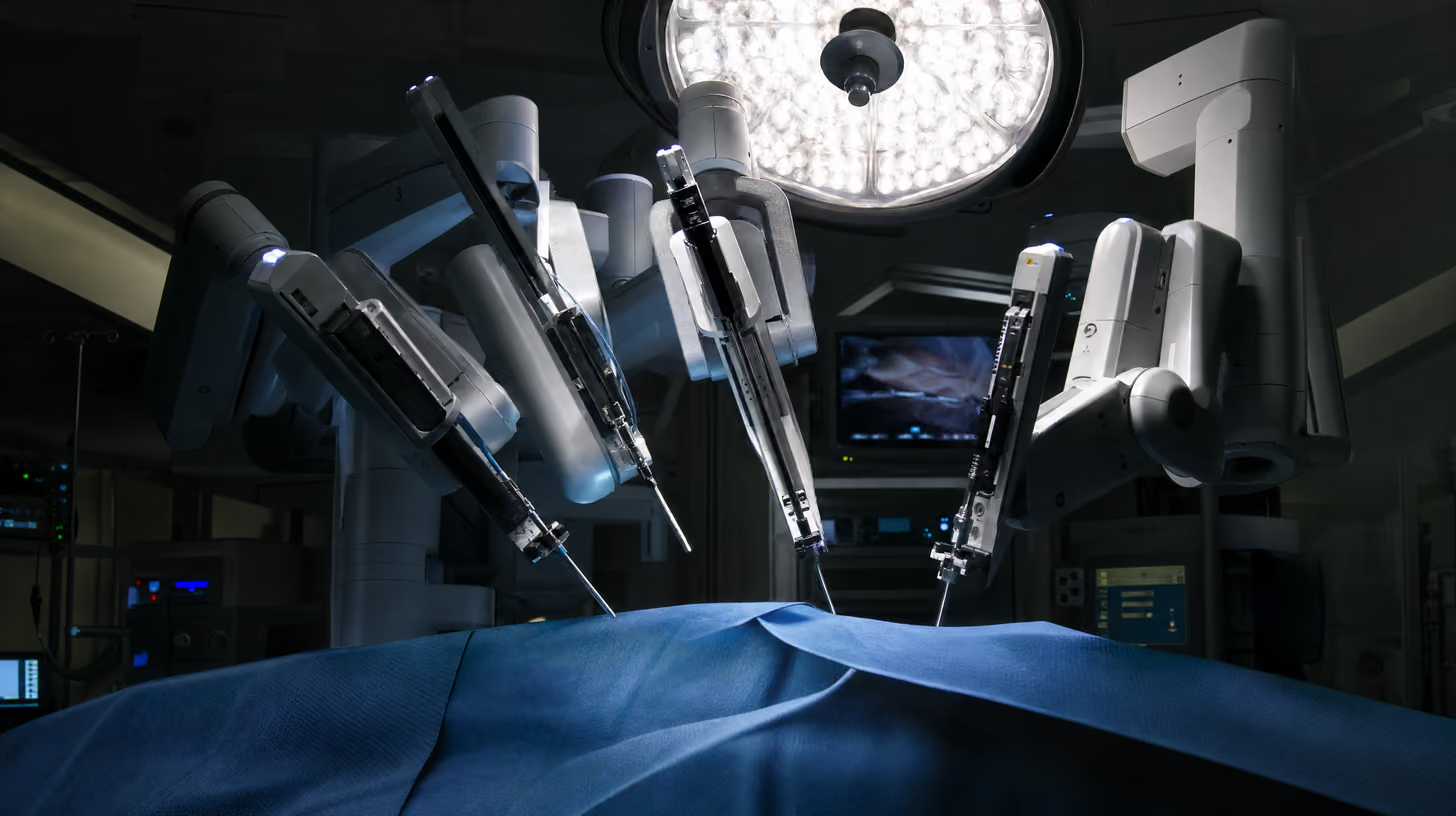
As Dr. Richard Nguyen, a board-certified and fellowship-trained surgeon specializing in advanced laparoscopic and bariatric surgery, I am dedicated to providing my patients with the most innovative and effective treatment options available. One such advancement that has revolutionized the field of abdominal wall reconstruction is da Vinci robotic abdominal wall reconstruction. This sophisticated surgical approach allows for unparalleled precision and control, leading to improved outcomes for patients facing complex abdominal wall defects. My expertise in non-mesh hernia repair, combined with the capabilities of the da Vinci system, enables me to tackle challenging cases with confidence, offering a path to recovery and a return to a higher quality of life.
Complex abdominal wall reconstruction is a specialized surgical procedure designed to repair large or recurrent hernias, often accompanied by significant tissue damage or loss. These conditions can arise from previous surgeries, trauma, or chronic medical issues, leading to pain, discomfort, and functional limitations. Traditional open surgery for these complex cases can be extensive, involving large incisions and prolonged recovery times. The goal of reconstruction is not just to close the defect, but to restore the integrity and function of the abdominal wall, providing long-term stability and preventing recurrence.
An abdominal wall reconstruction is considered "complex" when it involves large defects, recurrent hernias, infected fields, loss of abdominal domain (where a significant portion of abdominal contents has migrated outside the abdominal cavity), or when previous repair attempts have failed. These factors necessitate a more intricate surgical approach, often requiring advanced techniques to achieve a durable repair.
Surgical techniques have continuously evolved, moving towards less invasive methods that minimize patient discomfort and accelerate recovery. The introduction of robotic surgery, particularly the da Vinci system, marks a significant leap forward in this evolution. For complex abdominal wall reconstruction, the robotic platform offers several distinct advantages over traditional open or even conventional laparoscopic approaches.
The da Vinci system enhances abdominal wall reconstruction by providing surgeons with a magnified, 3D high-definition view of the surgical site, far superior to the human eye. Its wristed instruments mimic the human hand's dexterity, allowing for a greater range of motion and precision in tight spaces. This translates to finer dissection, more accurate tissue approximation, and the ability to perform intricate suturing with greater ease, which is crucial for the meticulous work involved in reconstructing the abdominal wall. This precision can lead to smaller incisions, reduced blood loss, less pain, and a faster return to normal activities for patients. It also allows for the placement of mesh (if indicated) in a more precise and secure manner, further enhancing the durability of the repair. For more information on hernia repair, please visit our dedicated page: hernia repair.
The adoption of da Vinci robotic abdominal wall reconstruction has brought numerous benefits to both patients and surgeons. From a patient perspective, the advantages are often immediately noticeable and contribute significantly to a smoother recovery and better long-term outcomes.
Patients undergoing robotic abdominal wall reconstruction typically experience less postoperative pain, reduced need for narcotic pain medication, and a lower risk of wound complications. The smaller incisions associated with robotic surgery result in less scarring and a more aesthetically pleasing outcome. Furthermore, the enhanced precision of the da Vinci system can lead to a stronger, more durable repair, minimizing the chances of hernia recurrence. This often translates to a quicker discharge from the hospital and a faster return to daily activities and work.
Determining the suitability of a patient for da Vinci robotic abdominal wall reconstruction involves a comprehensive evaluation of their medical history, the nature of their abdominal wall defect, and their overall health. As your surgeon, I meticulously assess each case to ensure the chosen approach offers the best possible outcome.
Candidacy for robotic abdominal wall reconstruction is determined by several factors, including the size and location of the hernia, the presence of previous surgical scars, the patient's body mass index (BMI), and any co-existing medical conditions. While many patients are excellent candidates, those with extremely large defects, significant loss of abdominal domain, or certain complex medical histories may require a more individualized approach. A thorough consultation and diagnostic imaging are essential to tailor the treatment plan to your specific needs.
Undergoing da Vinci robotic abdominal wall reconstruction is a carefully planned process. From the initial consultation to post-operative care, my team and I are committed to guiding you through every step, ensuring you are well-informed and comfortable.
During a da Vinci robotic abdominal wall reconstruction, several small incisions are made in the abdomen, through which the robotic instruments and a high-definition camera are inserted. I control the robotic arms from a console, performing the repair with enhanced precision and visualization. The procedure typically involves reducing the hernia contents, repairing the muscle and fascial layers of the abdominal wall, and often placing a surgical mesh to reinforce the repair. The exact steps vary depending on the complexity of the defect. The duration of the surgery can range from a few hours to several, followed by a period of recovery in the hospital.
Recovery after da Vinci robotic abdominal wall reconstruction is generally faster and less painful compared to open surgery. However, it is still a significant surgical procedure, and adherence to post-operative instructions is crucial for optimal healing and long-term success.
Most patients can expect to stay in the hospital for a few days following robotic abdominal wall reconstruction. Pain is managed with medication, and patients are encouraged to ambulate early to aid recovery. Light activities can usually be resumed within 2-4 weeks, with a gradual return to full activity over 6-12 weeks. Strenuous lifting and intense physical activity should be avoided for several months to allow the abdominal wall to heal completely. Regular follow-up appointments are scheduled to monitor your progress and ensure a smooth recovery.
Most insurance plans cover medically necessary abdominal wall reconstruction, including those performed with the da Vinci robotic system. However, coverage can vary, and it is always advisable to confirm with your insurance provider prior to surgery. Our office staff can assist you with understanding your benefits and navigating the pre-authorization process.
The duration of da Vinci robotic abdominal wall reconstruction surgery varies depending on the complexity and size of the abdominal wall defect. On average, these procedures can take anywhere from 2 to 6 hours. We will provide a more precise estimate during your consultation.
As with any surgical procedure, there are potential risks associated with robotic abdominal wall reconstruction, including infection, bleeding, injury to surrounding organs, and hernia recurrence. However, the minimally invasive nature of robotic surgery often helps to mitigate some of these risks compared to traditional open approaches. We will discuss all potential risks and benefits in detail during your consultation.
While da Vinci robotic abdominal wall reconstruction involves smaller incisions compared to open surgery, some scarring is inevitable. However, these scars are typically much smaller and less noticeable, often healing to thin lines that fade over time. The precise placement of incisions is also considered to minimize their cosmetic impact.
Patients are generally advised to avoid strenuous exercise, heavy lifting, and core-intensive activities for at least 6 to 12 weeks after robotic abdominal wall reconstruction. Light walking and gentle activities can usually be resumed earlier, often within 2-4 weeks. Your specific return-to-exercise timeline will be guided by your recovery progress and my recommendations.
Dr. Richard Nguyen is a distinguished, board-certified, and fellowship-trained surgeon with extensive expertise in advanced laparoscopic and bariatric surgery. He is particularly renowned for his innovative approach to non-mesh hernia repair and his proficiency with the da Vinci robotic surgical system. Dr. Nguyen is committed to utilizing cutting-edge techniques to achieve superior patient outcomes, specializing in complex abdominal wall reconstruction. His dedication to patient care and surgical excellence makes him a trusted leader in his field.
Wondering which surgical procedure might be right for your condition? We're here to help you understand your treatment options and develop a personalized surgical plan. Contact our office today to schedule a consultation.
Your path to improved health may be more achievable than you think—with advanced surgical techniques leading to faster recovery, reduced complications, and a significantly enhanced quality of life.
.avif)