Published April 14, 2026
Patients often use the terms hiatal hernia and acid reflux as if they mean the same thing. They do not.
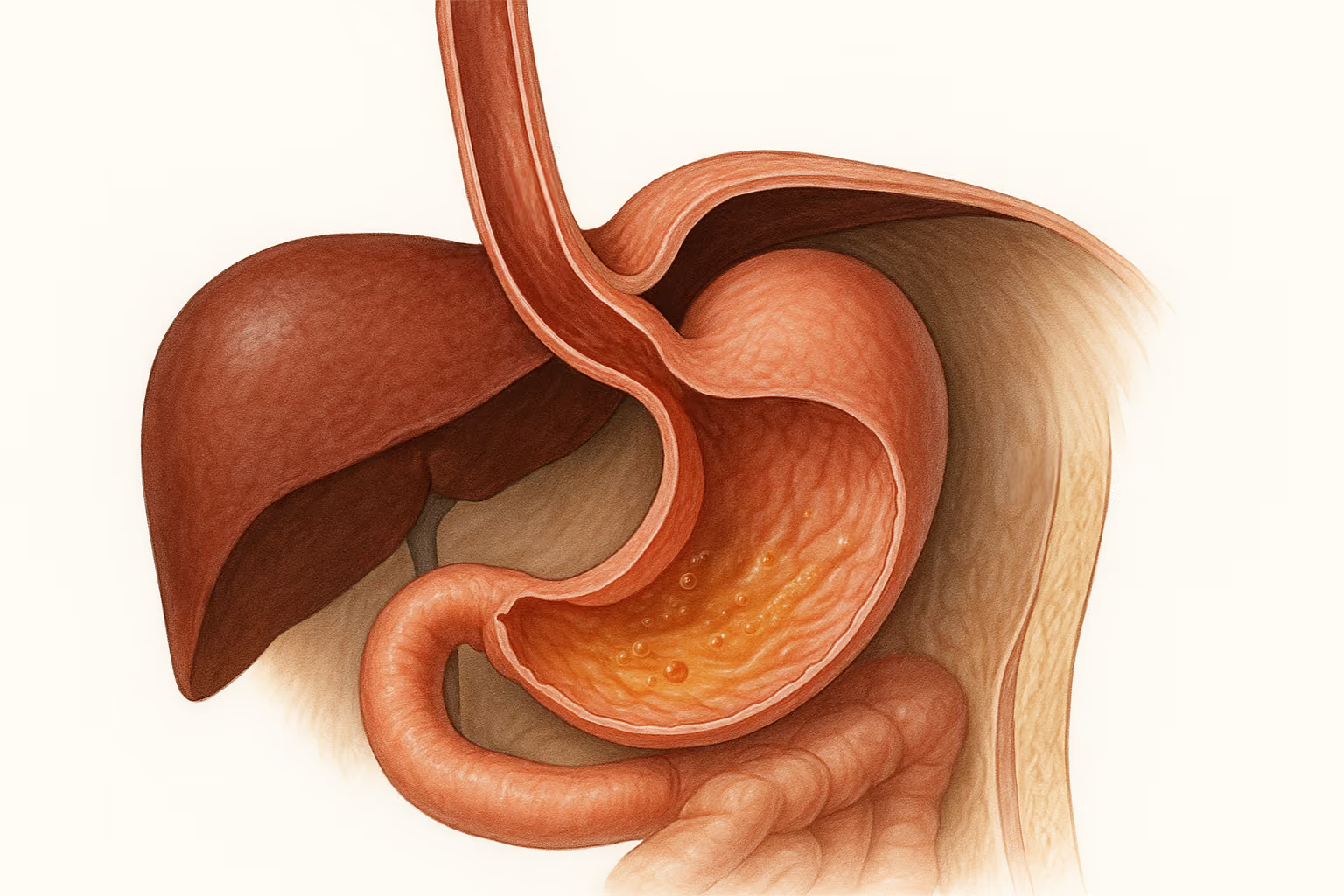
Acid reflux describes what is happening, stomach contents moving up into the esophagus. A hiatal hernia describes part of the anatomy that can make that reflux worse, when part of the stomach slides up through the diaphragm into the chest.
Some people have reflux without a hiatal hernia. Some people have a hiatal hernia with very little reflux. And some have both, which is when surgery starts becoming part of the conversation.
Acid reflux happens when the lower esophageal sphincter, the valve between the esophagus and stomach, does not keep stomach contents where they belong.
Common symptoms include:
If symptoms become chronic, the diagnosis often shifts to GERD, gastroesophageal reflux disease.
A hiatal hernia occurs when part of the stomach pushes through the hiatus, the opening in the diaphragm where the esophagus passes into the abdomen.
Small hiatal hernias are common and may cause little or no trouble. Larger hiatal hernias can worsen reflux, create pressure symptoms, interfere with swallowing, and in some cases require repair even beyond reflux control.
That is why treatment depends on both symptoms and anatomy, not just one or the other.
Many patients improve with non-surgical treatment, especially early on.
That may include:
If those measures control symptoms well and you are not developing complications, surgery may not be necessary.
Surgery becomes more compelling when:
At that point, the question is no longer just, "Can I manage this?" It becomes, "Is there now a structural problem that surgery is better suited to fix?"
When surgery is indicated, treatment often includes:
At Lifetime Surgical, minimally invasive approaches are often available. Learn more about our hiatal hernia repair approach and our broader laparoscopic surgery program.
Dr. Nguyen looks at the full picture before recommending surgery:
Some patients need reassurance and medical management. Others clearly need repair. The important thing is not to guess based on internet symptoms alone.
Recovery depends on the exact repair, but in general:
The goal is not just symptom relief in the first week. The goal is a durable long-term repair.
Yes. Many patients with GERD do not have a meaningful hiatal hernia.
Yes. Some hiatal hernias are found incidentally or mainly cause pressure, fullness, or swallowing symptoms rather than classic heartburn.
No. Surgery depends on symptoms, size, associated reflux, and whether complications are developing.
Usually when medication is failing, symptoms recur off medication, regurgitation is significant, or the anatomy clearly needs repair.
Many patients are candidates for minimally invasive surgery. The right platform depends on anatomy, complexity, and surgeon judgment.
Hiatal hernia vs acid reflux is not really an either-or question. Many patients have both, and the treatment decision comes down to whether the problem is still manageable medically or has become structural enough that surgery offers the better fix.
If medications are no longer enough, symptoms keep coming back, or you have confirmed hiatal hernia anatomy with ongoing reflux, it is time for a surgical evaluation.
Schedule a consultation with Lifetime Surgical.
If you are trying to figure out whether your symptoms are still a medication problem or have become a structural problem, these pages are the next stop for many Lifetime Surgical patients in San Jose and Los Gatos.
Wondering which surgical procedure might be right for your condition? We're here to help you understand your treatment options and develop a personalized surgical plan. Contact our office today to schedule a consultation.
Your path to improved health may be more achievable than you think—with advanced surgical techniques leading to faster recovery, reduced complications, and a significantly enhanced quality of life.
.avif)