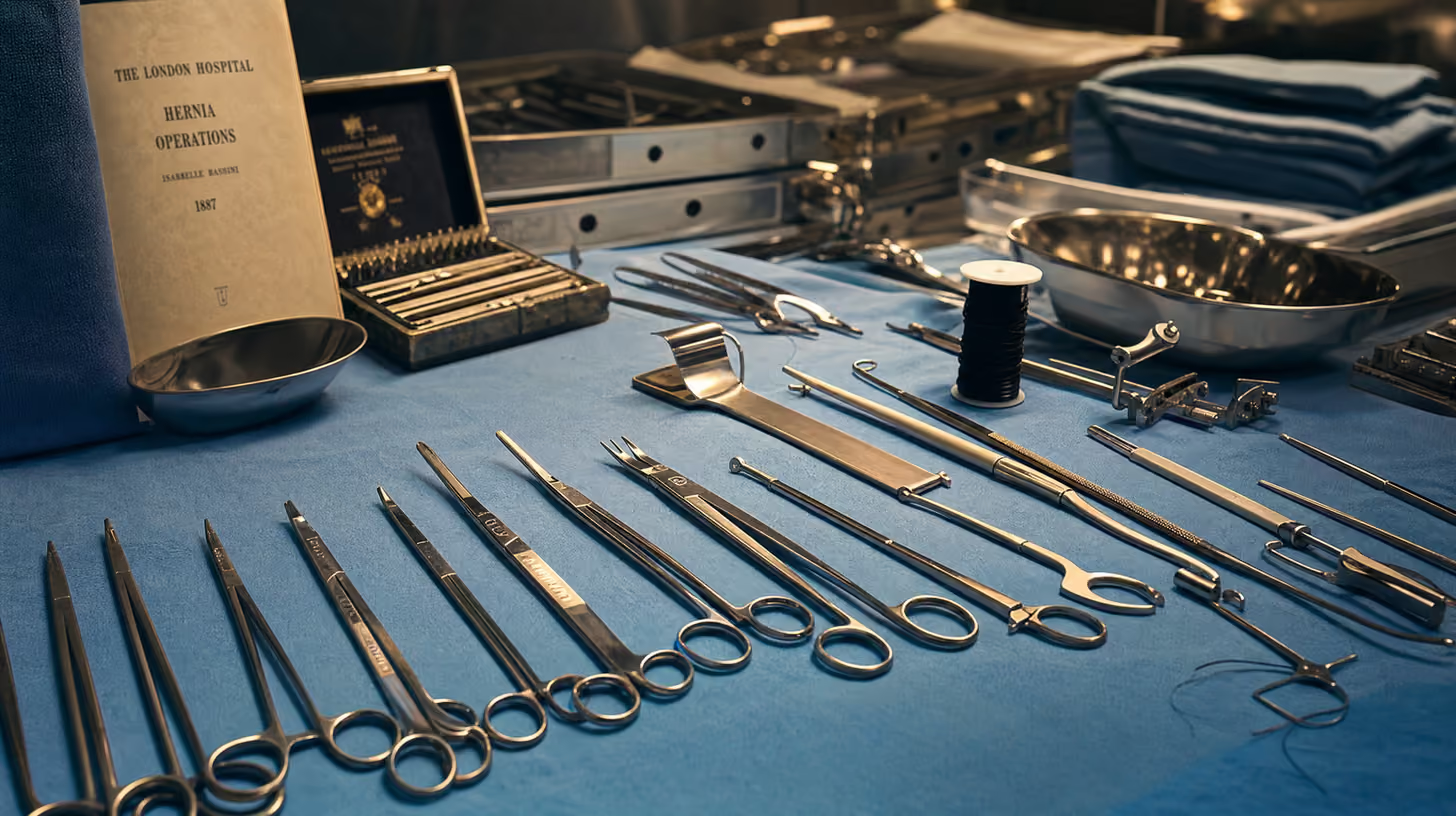
As a surgeon specializing in advanced laparoscopic and bariatric procedures, I, Dr. Richard Nguyen, have witnessed firsthand the evolution of hernia repair. The journey from traditional methods to the sophisticated non-mesh hernia repair history techniques we employ today is a testament to medical innovation and a commitment to patient well-being. This comprehensive overview will delve into the historical milestones that have shaped our understanding and approach to hernia repair, culminating in the modern tissue techniques that offer durable, mesh-free solutions for our patients.
A hernia occurs when an organ or fatty tissue protrudes through a weak spot in the surrounding muscle or connective tissue. While some hernias may be asymptomatic, many cause pain, discomfort, and can lead to serious complications if left untreated. Surgical repair is often necessary to alleviate symptoms and prevent further issues. Historically, the primary challenge in hernia repair has been to achieve a strong, lasting closure of the defect while minimizing recurrence.
For centuries, surgeons have grappled with the challenge of hernia repair. Early techniques often involved simply closing the defect with sutures, a method that frequently led to high recurrence rates due to tension on the tissues. The understanding of anatomical structures and the biomechanics of hernia formation was rudimentary, and surgical outcomes were often unpredictable.
In the mid-20th century, the Shouldice Hospital in Canada revolutionized hernia repair with its innovative non-mesh technique. Developed by Dr. Earle Shouldice, this method focused on meticulously reinforcing the posterior wall of the inguinal canal using multiple layers of imbricated tissue. The Shouldice repair, performed under local anesthesia with a focus on early ambulation, demonstrated significantly lower recurrence rates compared to previous tension-based repairs.
The Shouldice repair's effectiveness stems from its tension-free, layered closure. By overlapping and suturing strong fascial layers, the technique creates a robust repair that mimics the natural anatomy, distributing tension evenly and promoting strong scar tissue formation. This meticulous approach, combined with specialized surgical training and patient rehabilitation protocols, has made it a gold standard for non-mesh hernia repair for decades.
The introduction of synthetic mesh in the latter half of the 20th century marked another significant shift in hernia repair. Mesh offered a seemingly simple solution to reinforce weakened tissues, leading to a rapid adoption across the surgical community. While mesh repairs initially showed promisingly low recurrence rates, long-term complications such as chronic pain, infection, mesh migration, and rejection have led to a re-evaluation of its widespread use.
Many patients are now actively seeking non-mesh hernia repair options due to concerns about potential mesh-related complications. While mesh can be effective, the risks of chronic pain, infection, and foreign body sensation have become increasingly apparent. For patients who prioritize avoiding synthetic materials or have experienced adverse reactions to mesh in the past, tissue-based repairs offer a compelling alternative, providing a natural and often more comfortable outcome.
Building upon the principles of the Shouldice repair, modern tissue techniques have further refined non-mesh hernia repair. These advancements incorporate a deeper understanding of tissue biology, biomechanics, and surgical precision. Techniques such as the Desarda repair and the Bassini repair, while distinct, share the common goal of achieving durable repair without the need for synthetic implants.
The Desarda repair utilizes a strip of external oblique aponeurosis to reinforce the posterior wall, creating a strong, physiological repair. This technique avoids tension and relies on the patient's own robust tissue, minimizing the risk of foreign body reactions and chronic pain associated with mesh.
The Bassini repair, one of the earliest tension-free tissue repairs, involves suturing the conjoint tendon to the inguinal ligament. While it predates Shouldice, its principles of anatomical reconstruction have influenced many subsequent non-mesh techniques.
The future of hernia repair lies in a personalized approach, where surgical techniques are tailored to the individual patient's anatomy, hernia type, and preferences. For many, non-mesh hernia repair represents a vital option, offering a return to natural tissue repair with excellent long-term outcomes. As surgeons, our commitment is to provide the safest and most effective solutions, ensuring that each patient receives the care best suited to their unique needs.
Long-term outcomes for non-mesh hernia repair, particularly with techniques like the Shouldice and modern tissue repairs, are generally excellent. Studies have shown low recurrence rates and a significantly reduced incidence of chronic pain and other complications associated with synthetic mesh. Patients often report a more natural feel and a quicker return to normal activities, making these techniques a highly desirable option for many.
The evolution of hernia repair is a journey of continuous improvement, driven by a desire to optimize patient outcomes. From the pioneering work of Shouldice to the sophisticated tissue techniques of today, non-mesh hernia repair has consistently offered a reliable and patient-friendly alternative to synthetic mesh. As we look to the future, the emphasis on personalized medicine and advanced tissue-based solutions will continue to shape the landscape of hernia surgery, ensuring that patients receive the most appropriate and effective care for their condition. At Lifetime Surgical, we are dedicated to offering these advanced non-mesh options, providing our patients with durable repairs and a better quality of life. Learn more about our hernia repair options.
Non-mesh hernia repair is suitable for many types of hernias, particularly inguinal hernias. The suitability depends on the size and type of the hernia, as well as the patient's overall health and tissue quality. A thorough consultation with a qualified surgeon is essential to determine the best approach for each individual case.
Recovery time for non-mesh hernia repair can vary, but many patients experience a relatively quick recovery. Most individuals can return to light activities within a few days to a week, with a full return to strenuous activities typically within 4-6 weeks. Early ambulation is often encouraged to promote healing and reduce complications.
While non-mesh hernia repair offers many advantages, potential disadvantages can include a slightly longer operative time compared to some mesh repairs and a steeper learning curve for surgeons to master the intricate tissue dissection and suturing techniques. However, for many patients, the benefits of avoiding synthetic materials and reducing long-term complications outweigh these considerations.
The choice between mesh and non-mesh hernia repair should be made in close consultation with your surgeon. Factors to consider include the type and size of your hernia, your medical history, personal preferences, and the potential risks and benefits of each approach. Your surgeon will provide a comprehensive overview to help you make an informed decision.
Dr. Richard Nguyen is a board-certified, fellowship-trained surgeon specializing in advanced laparoscopic and bariatric surgery. With extensive expertise in non-mesh hernia repair, Dr. Nguyen is committed to providing patients with the most effective and personalized surgical solutions. His dedication to innovative techniques and patient-centered care ensures optimal outcomes and a superior patient experience.
Wondering which surgical procedure might be right for your condition? We're here to help you understand your treatment options and develop a personalized surgical plan. Contact our office today to schedule a consultation.
Your path to improved health may be more achievable than you think—with advanced surgical techniques leading to faster recovery, reduced complications, and a significantly enhanced quality of life.
.avif)