
Published April 2, 2026
If you've been battling chronic heartburn, acid reflux, or an uncomfortable feeling of food getting "stuck" in your chest, a hiatal hernia could be the cause. Hiatal hernias are surprisingly common — affecting up to 60% of people over age 60 — yet many go undiagnosed because they're mistaken for simple acid reflux or GERD.
At Lifetime Surgical in San Jose and Los Gatos, Dr. Richard Nguyen specializes in both diagnosing and surgically treating hiatal hernias using advanced robotic and laparoscopic techniques. With more than 15,000 surgeries and 20 years of experience, he is one of the South Bay's most experienced surgeons for this condition.
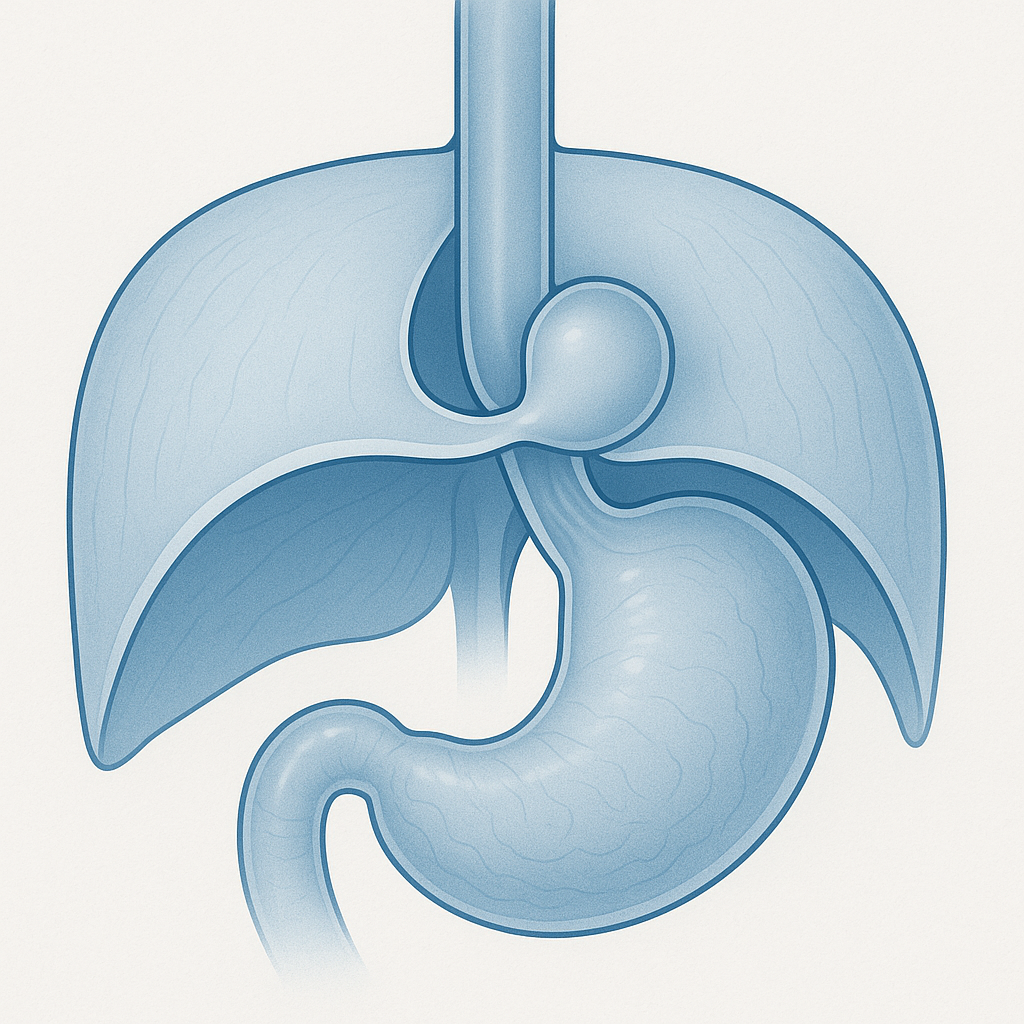
A hiatal hernia occurs when the upper part of your stomach pushes through the diaphragm — the large muscle that separates your chest cavity from your abdominal cavity. Normally, your esophagus passes through a small opening in the diaphragm (called the hiatus) to connect to your stomach. When this opening weakens or stretches, part of the stomach can slide upward into the chest.
Type I — Sliding Hiatal Hernia (Most Common — 95% of cases)
The gastroesophageal junction slides upward through the hiatus. This type is most associated with acid reflux and GERD. It often slides in and out, which is why symptoms may come and go.
Type II — Paraesophageal Hernia (Rolling Hernia)
A portion of the stomach pushes up through the hiatus next to the esophagus. This type is less common but potentially more dangerous because the herniated portion can become trapped or lose blood supply.
Type III — Combined (Sliding + Paraesophageal)
Both the gastroesophageal junction and a portion of the stomach herniate. This represents a combination of Types I and II.
Type IV — Complex Paraesophageal
A large portion of the stomach — and sometimes other organs — herniate through the diaphragm. This is the most severe type and almost always requires surgical repair.
Several factors contribute:
Many small hiatal hernias cause no symptoms. When symptoms occur, they often overlap with GERD:
If persistent reflux symptoms don't respond to medication, Dr. Nguyen may recommend:
May be appropriate when the hernia is small, symptoms are controlled with medication, or health risks make surgery inadvisable. Conservative measures include PPIs, H2 blockers, lifestyle changes, weight loss, and avoiding trigger foods.
Dr. Nguyen performs hiatal hernia repair using the da Vinci robotic surgical system, which offers significant advantages for this technically demanding procedure.
Hiatal hernia repair typically involves two components:
1. Hernia reduction and hiatal closure — The herniated stomach is pulled back down, and the stretched hiatal opening is tightened with sutures (sometimes reinforced with mesh).
2. Fundoplication — The upper stomach is wrapped around the lower esophagus to create a new valve:
Dr. Nguyen determines the best approach based on your anatomy and manometry results.
The hiatal area is a challenging surgical space. Robotic surgery provides:
Week 1–2: Clear liquid diet progressing to full liquids. Mild to moderate pain. Walking encouraged.
Week 2–3: Soft, pureed foods. Most return to desk work. Driving resumes off pain medication.
Week 3–4: Soft solid foods. Gradually expanding diet. Energy improving.
Week 4–6: Return to regular diet. Most cleared for full activity.
Important tips: Eat small, frequent meals. Chew thoroughly. Avoid carbonated beverages for 4–6 weeks. Some mild difficulty swallowing is normal as post-op swelling resolves.
Read our complete post-surgery nutrition guide for more dietary recovery information.
With 15,000+ surgeries over 20 years, Dr. Nguyen has the experience that directly correlates with better outcomes.
Proficient in robotic, laparoscopic, and open techniques — the approach is tailored to your specific hernia.
If your hiatal hernia is related to obesity, Dr. Nguyen can also discuss bariatric surgery options that address both conditions simultaneously.
Dr. Nguyen lives in Los Gatos and operates at Good Samaritan Hospital in San Jose, Los Gatos Community Hospital–El Camino, and Silicon Valley Surgery Center.
Offices in San Jose and Los Gatos, serving patients throughout Silicon Valley including Santa Clara, Cupertino, Sunnyvale, Mountain View, Fremont, Saratoga, Campbell, and the greater South Bay.
If you're struggling with chronic heartburn, acid reflux, difficulty swallowing, or have been told you have a hiatal hernia, don't settle for a lifetime of medications. Surgical repair can provide lasting relief.
Contact Lifetime Surgical to schedule a consultation with Dr. Richard Nguyen.
No. Hiatal hernias do not heal or close on their own. The diaphragm opening will not tighten back without surgical repair. However, many small hernias can be managed with medication and lifestyle changes.
Untreated symptomatic hernias can lead to chronic esophagitis, esophageal stricture, Barrett's esophagus (a precancerous condition), chronic anemia, and rarely, strangulation — a surgical emergency.
The procedure typically takes 1.5 to 3 hours, depending on size and complexity. Most patients go home the same day or the following morning.
The goal is to eliminate or dramatically reduce medication need. Approximately 85–90% of patients stop taking PPIs after successful fundoplication. Some may still need occasional antacid use.
Recurrence rates range from 5–15% depending on original hernia size. Dr. Nguyen's high-volume experience and robotic precision help minimize this risk. Revision surgery is possible if a hernia does recur.
Wondering which surgical procedure might be right for your condition? We're here to help you understand your treatment options and develop a personalized surgical plan. Contact our office today to schedule a consultation.
Your path to improved health may be more achievable than you think—with advanced surgical techniques leading to faster recovery, reduced complications, and a significantly enhanced quality of life.
.avif)


