
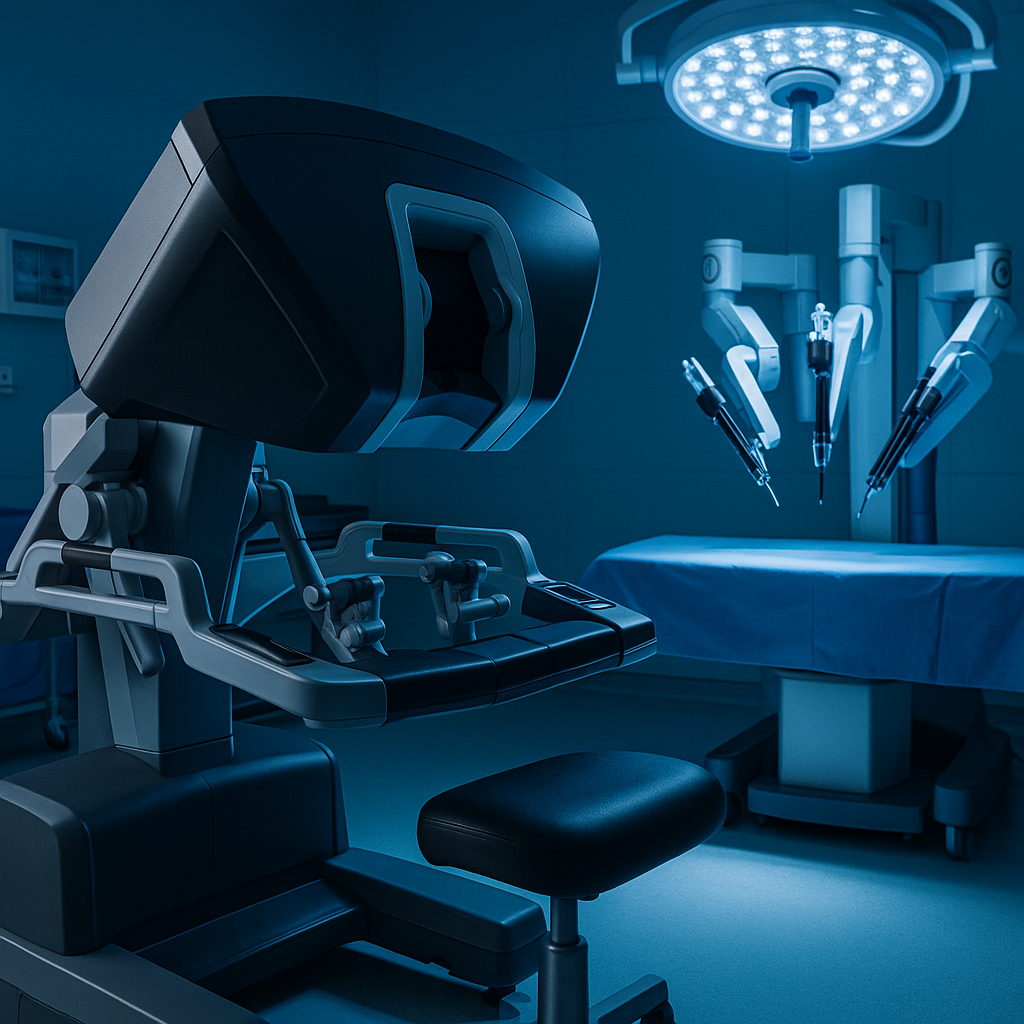
Published April 1, 2026
|---|---|---|
| Incision size | 8–12 mm (3–4 incisions) | 5–12 mm (3–4 incisions) | 3–8 inches (single incision) |
| Visualization | 3D HD, 10x magnification | 2D HD | Direct line of sight |
| Instrument dexterity | 7 degrees of freedom, 540° rotation | 4 degrees of freedom, limited rotation | Full hand dexterity |
| Tremor filtration | Yes | No | No |
| Surgeon ergonomics | Excellent (seated at console) | Moderate (standing) | Variable (standing) |
| Post-op pain | Least | Less than open | Most |
| Recovery time | Fastest | Fast | Slowest |
| Scarring | Minimal | Minimal | More significant |
| Best for | Complex procedures, tight spaces, obese patients | Straightforward minimally invasive cases | Very large/complex hernias, emergencies |
It's important to note that not every procedure requires robotic assistance. Traditional laparoscopic surgery remains an excellent option for many cases. Dr. Nguyen evaluates each patient individually and recommends the approach that will deliver the best outcome based on the procedure type, patient anatomy, and clinical complexity.
Performing robotic surgery requires specialized training beyond general surgical residency. Dr. Richard Nguyen has completed:
Dr. Nguyen performs robotic surgery at Good Samaritan Hospital in San Jose, Los Gatos Community Hospital-El Camino, and the Silicon Valley Surgery Center — all equipped with the latest da Vinci systems.
His philosophy is straightforward: use the technology that gives each patient the best possible outcome. For some patients, that means robotic-assisted surgery. For others, traditional laparoscopic or even open approaches may be more appropriate. You can trust that Dr. Nguyen's recommendation is based on clinical evidence and your individual needs — not a one-size-fits-all approach.
| Timeframe | Typical Milestones |
|---|---|
| Day 1–2 | Walking, light eating, managing mild discomfort |
| Day 3–7 | Gradual return to daily activities. Many patients report feeling "surprisingly good." |
| Week 1–2 | Return to desk work. Driving resumes when off pain medication. |
| Week 3–4 | Light exercise resumes. Energy levels improving. |
| Week 4–6 | Most patients cleared for full activity, including strenuous exercise and heavy lifting. |
Individual recovery timelines vary based on the specific procedure performed and your overall health.
Robotic-assisted surgery may be an excellent option if:
The best way to determine whether robotic surgery is appropriate for your condition is a personal consultation with Dr. Nguyen.
Contact Lifetime Surgical to schedule your appointment at our San Jose or Los Gatos office.
No. Dr. Nguyen controls every movement of the robotic instruments in real time. The da Vinci system is a tool that enhances the surgeon's capabilities — it does not make autonomous decisions or movements. Think of it as an extension of Dr. Nguyen's hands with added precision, steadiness, and range of motion.
Robotic surgery has been shown to have comparable or lower complication rates compared to both traditional laparoscopic and open surgery for many procedures. The enhanced precision, better visualization, and reduced tissue trauma contribute to improved safety profiles and outcomes.
The da Vinci Surgical System received FDA clearance in 2000 and has been used in millions of procedures worldwide. It is the most extensively studied and widely adopted robotic surgical platform in existence.
You will have 3–4 very small scars (each less than half an inch) where the robotic ports were inserted. These typically fade significantly over time and are far less noticeable than scars from open surgery.
Yes. Robotic-assisted surgery is covered by most major insurance plans, including Medicare, when the underlying procedure is medically necessary (such as hernia repair or bariatric surgery). The robotic approach itself does not typically increase your out-of-pocket cost. Our team can help verify your specific coverage.
While the hospital facility costs for robotic surgery may be slightly higher due to the equipment involved, this is usually offset by shorter hospital stays and faster recovery. For most insured patients, out-of-pocket costs are comparable to traditional laparoscopic surgery.
No. Robotic surgery requires specialized training, certification by Intuitive Surgical, proctored cases, and credentialing by the hospital. Dr. Nguyen has completed all required training and maintains active proficiency through ongoing high-volume robotic surgical practice.
Wondering which surgical procedure might be right for your condition? We're here to help you understand your treatment options and develop a personalized surgical plan. Contact our office today to schedule a consultation.
Your path to improved health may be more achievable than you think—with advanced surgical techniques leading to faster recovery, reduced complications, and a significantly enhanced quality of life.
.avif)


