
Published April 3, 2026
That sharp, sudden pain in your lower right abdomen that woke you up at 3 AM — is it something you ate, or is it something far more serious?
Every year, approximately 300,000 Americans undergo emergency appendectomy, making it one of the most common surgical emergencies in the country. Appendicitis doesn't send a save-the-date. It strikes without warning, and when it does, quick recognition and expert surgical care can mean the difference between a straightforward recovery and a life-threatening complication.
At Lifetime Surgical, Dr. Richard Nguyen and Dr. Avery Joseph perform minimally invasive appendectomy using advanced laparoscopic and robotic surgical techniques — often getting patients home the same day or next morning with minimal scarring and rapid recovery.
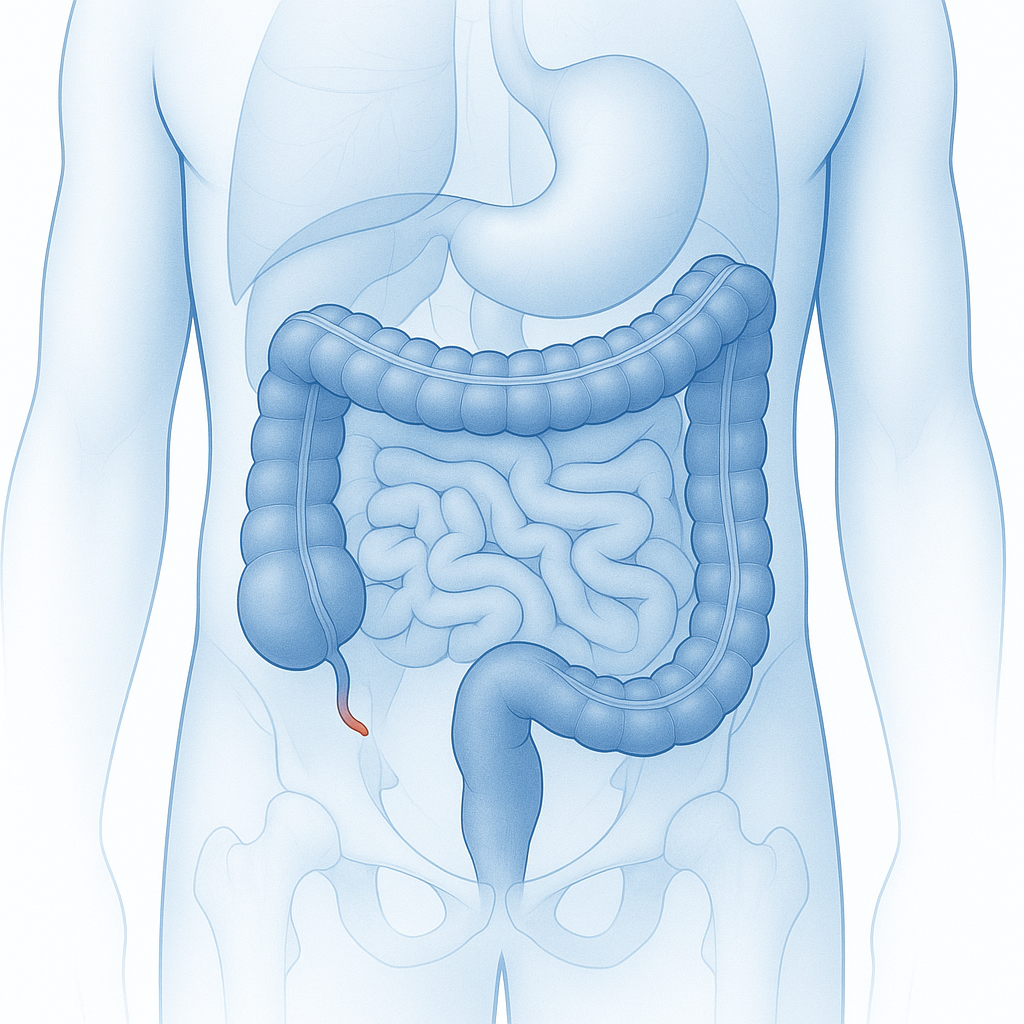
The appendix is a small, finger-shaped pouch attached to the large intestine in the lower right abdomen. Despite decades of research, its exact function remains debated — though recent studies suggest it may play a role in immune function and maintaining healthy gut bacteria.
Appendicitis occurs when the appendix becomes blocked, usually by:
Once blocked, bacteria multiply rapidly inside the appendix, causing inflammation, swelling, and infection. Without treatment, the appendix can rupture (perforate) — spilling infected material into the abdominal cavity and causing a potentially life-threatening condition called peritonitis.
This is why appendicitis is a surgical emergency.
Appendicitis symptoms typically develop over 12-24 hours and follow a characteristic pattern — but not always. Here's what to watch for:
Appendicitis doesn't always follow the textbook. Symptoms can present differently based on:
Important: If you or a family member develops sudden abdominal pain that progressively worsens — especially with fever, nausea, and tenderness in the right lower abdomen — seek emergency medical attention immediately.
The answer, in most cases, is: as soon as appendicitis is diagnosed.
Studies show that the risk of appendix rupture increases approximately 5% for every 12-hour delay after symptoms begin. A ruptured appendix can lead to:
Dr. Nguyen performs the vast majority of appendectomies using a minimally invasive laparoscopic approach:
Benefits of laparoscopic appendectomy:
For select patients, Dr. Nguyen can perform appendectomy through a single incision hidden in the navel — leveraging his extensive experience with single-incision laparoscopic surgery. The result is virtually no visible scarring.
Day of surgery: Most patients wake up feeling significantly better. Pain is manageable with oral medications. Clear liquids, advancing to regular diet.
Days 1-3: Most patients discharged same day or next morning. Light walking encouraged.
Week 1: Gradual return to normal activities. Desk job return in 5-7 days.
Weeks 2-4: Resume exercise gradually. Full recovery for most patients.
Recovery takes longer when the appendix has ruptured: hospital stay may be 3-7 days for IV antibiotics, and full recovery may take 4-6 weeks. This is why early recognition and treatment is so important.
Can you treat appendicitis with antibiotics alone?
Some research has explored antibiotics-only treatment, but studies show up to 40% of patients eventually need surgery within a year. Surgery remains the gold standard.
Is appendectomy performed robotically?
Yes. Dr. Nguyen can perform appendectomy using the da Vinci Robotic Surgical System, and the newest single-incision robotic platform offers virtually scarless surgery.
Will removing my appendix affect my health long-term?
No. Living without an appendix does not cause any known long-term health problems.
Contact Lifetime Surgical to schedule a consultation — or if you're experiencing symptoms of appendicitis, go to your nearest emergency room immediately.
Lifetime Surgical serves patients throughout San Jose, Los Gatos, Campbell, Saratoga, Cupertino, Sunnyvale, Santa Clara, Mountain View, Fremont, and the greater Silicon Valley area.
Wondering which surgical procedure might be right for your condition? We're here to help you understand your treatment options and develop a personalized surgical plan. Contact our office today to schedule a consultation.
Your path to improved health may be more achievable than you think—with advanced surgical techniques leading to faster recovery, reduced complications, and a significantly enhanced quality of life.
.avif)


