Published May 4, 2026
By Dr. Richard Nguyen, DO, FACS, FACOS
When patients are diagnosed with an inguinal hernia, one of the first questions they ask is, "Do I have to have mesh?" For decades, the standard approach to hernia repair has heavily relied on synthetic mesh to bridge the gap in the abdominal wall. While mesh repair is effective and appropriate for many patients, it is not the only option. For those seeking a non-mesh alternative, the Shouldice technique stands out as the gold standard in pure tissue repair.
As a fellowship-trained surgeon at Vanderbilt, I have dedicated a significant portion of my practice at Lifetime Surgical in San Jose to mastering and offering advanced hernia repair techniques, including the Shouldice method. This approach requires specialized training and a deep understanding of abdominal wall anatomy, but for the right candidate, it offers exceptional outcomes without the introduction of foreign materials.
In this comprehensive guide, we will explore the history of the Shouldice technique, how it works, why it has stood the test of time, and how it compares to modern mesh repairs. Whether you are in Los Gatos, Campbell, Saratoga, or anywhere in the Bay Area, understanding your options is the first step toward a successful recovery.
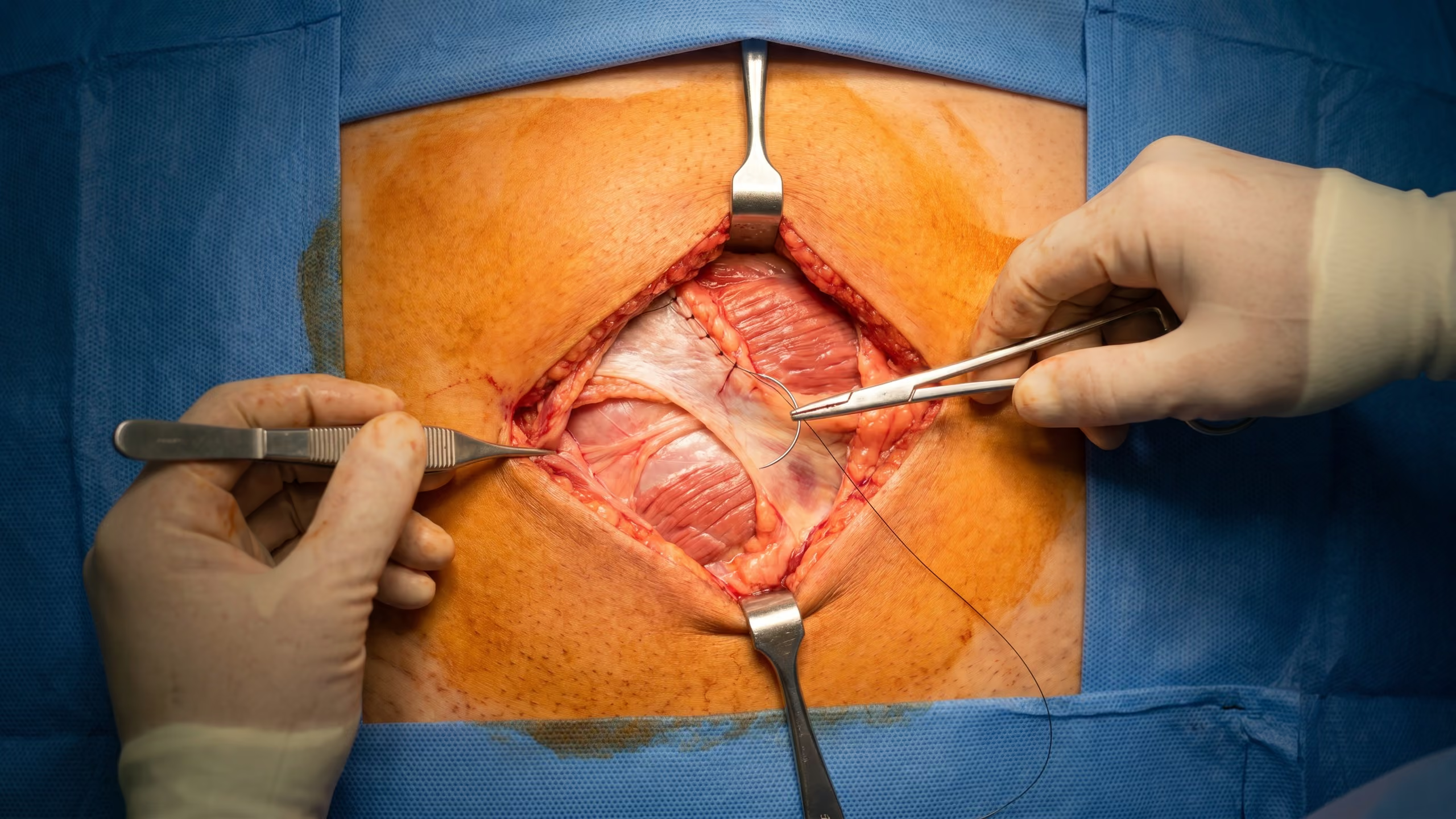
The Shouldice technique is a specialized, non-mesh method of repairing inguinal hernias by reconstructing the natural layers of the abdominal wall using the patient's own tissue and continuous stainless steel or synthetic sutures. It involves a meticulous, four-layer overlapping closure that reinforces the weakened area, providing a strong, durable repair with exceptionally low recurrence rates when performed by an experienced surgeon.
The Shouldice technique was developed during World War II by Dr. Edward Earle Shouldice in Canada. At the time, many young men were being disqualified from military service due to hernias. Dr. Shouldice recognized the need for a reliable, efficient repair that would allow these men to return to active duty quickly. He refined the traditional tissue repair methods, focusing on local anesthesia, early ambulation, and a multi-layered reconstruction of the transversalis fascia.
The success of his method led to the founding of the Shouldice Hospital in Ontario, which remains dedicated exclusively to hernia repair. Over the decades, the technique has been rigorously studied and validated. While the widespread adoption of tension-free mesh repairs in the 1980s and 1990s shifted the paradigm of hernia surgery, the Shouldice repair has maintained its reputation as the premier non-mesh option, backed by extensive clinical data and long-term success rates.
The brilliance of the Shouldice repair lies in its anatomical precision. Unlike a simple "plug and patch" approach, this technique rebuilds the structural integrity of the groin. Here is an overview of how the procedure is performed:
This overlapping, multi-layered approach distributes tension evenly across the repair, creating a robust reinforcement that relies entirely on the patient's natural anatomy.
In an era where medical technology is constantly evolving, it is remarkable that a surgical technique developed over 80 years ago remains highly relevant. The enduring success of the Shouldice repair can be attributed to several key factors:
The technique respects the natural anatomy of the groin. By reconstructing the transversalis fascia and reinforcing the muscular layers, it restores the physiological function of the abdominal wall rather than simply patching a hole.
While surgical mesh is safe and effective for the vast majority of patients, a subset of individuals prefers to avoid permanent implants. Concerns about mesh-related complications, such as chronic pain, infection, or migration—though rare—drive the demand for pure tissue repairs. The Shouldice technique eliminates these specific risks.
When performed at specialized centers or by highly trained surgeons, the Shouldice repair boasts recurrence rates of less than 1-2%, which is comparable to, and in some studies better than, standard mesh repairs. The long-term durability of the repair is well-documented in surgical literature.
Choosing between a Shouldice repair and a mesh repair is a nuanced decision that should be made in consultation with an experienced hernia surgeon. Here is how the two approaches compare:
Mesh repairs are often referred to as "tension-free" because the mesh bridges the defect without pulling the surrounding tissues together. The Shouldice repair is a "tension" repair, as it relies on suturing tissues together. However, the multi-layered overlapping technique distributes this tension so effectively that it minimizes discomfort and the risk of the sutures pulling through the tissue.
Both techniques offer excellent recovery profiles. Mesh repairs, particularly when performed via minimally invasive laparoscopic surgery or robotic surgery, often allow for a slightly faster return to strenuous activities. The Shouldice repair may involve a slightly longer period of restricted lifting as the natural tissues heal and integrate, but early ambulation is encouraged in both.
Mesh repairs carry a small risk of mesh-specific complications, such as chronic foreign body sensation or mesh infection. The Shouldice repair avoids these but carries a slightly higher risk of early postoperative pain due to the tissue tension and extensive dissection required. Chronic pain rates are generally low for both when performed by experts.
While the Shouldice repair is an excellent option, it is not suitable for every patient or every type of hernia. Ideal candidates typically include:
Conversely, patients with large, direct inguinal hernias, significant tissue weakness, or recurrent hernias are often better candidates for a mesh-based hernia repair.
The Shouldice technique is technically demanding. It requires a thorough understanding of the complex three-dimensional anatomy of the groin and meticulous surgical execution. Unlike a mesh repair, which can be somewhat forgiving due to the broad coverage of the prosthesis, a tissue repair relies entirely on the surgeon's ability to identify and reconstruct the specific fascial layers.
Unfortunately, as mesh repairs became the standard of care in general surgery training programs over the last few decades, fewer surgeons have been formally trained in the Shouldice technique. When considering this approach, it is crucial to seek out a surgeon who has specific experience and a dedicated interest in non-mesh hernia repairs. At Lifetime Surgical, we pride ourselves on offering a tailored approach to each patient, ensuring that whether you receive a Shouldice repair or a robotic mesh repair, the procedure is performed with the highest level of expertise.
The Shouldice technique remains a cornerstone of hernia surgery, offering a proven, durable, and anatomically sound alternative to mesh repair. While it requires specific surgical expertise and is not the right choice for every patient, it provides peace of mind for those seeking a pure tissue reconstruction.
If you are dealing with an inguinal hernia and want to explore all your options, including the Shouldice technique, we are here to help. Our goal is to provide you with the information and expert care you need to make the best decision for your health and lifestyle.
Patients may experience slightly more tightness or discomfort in the first few days following a Shouldice repair compared to a mesh repair due to the tension placed on the reconstructed tissues. However, this is typically well-managed with standard pain protocols, and long-term chronic pain rates are very low.
Most patients can walk immediately after surgery and return to light activities within a few days. However, because the repair relies on your body's natural healing process to build strength, you will need to avoid heavy lifting and strenuous exercise for about 4 to 6 weeks.
No, the Shouldice technique is specifically designed for the unique anatomy of the inguinal (groin) canal. Other pure tissue repair techniques exist for umbilical or ventral hernias, but they are distinct from the Shouldice method.
Yes, the Shouldice technique is a recognized and standard surgical procedure for inguinal hernia repair. It is typically covered by major medical insurance plans, just like a standard mesh repair. Our office can help verify your specific benefits.
Ready to discuss your hernia repair options? Contact Lifetime Surgical today to schedule a consultation with Dr. Richard Nguyen. Call us at 408-850-0176 or visit our contact page to book your appointment.
Wondering which surgical procedure might be right for your condition? We're here to help you understand your treatment options and develop a personalized surgical plan. Contact our office today to schedule a consultation.
Your path to improved health may be more achievable than you think—with advanced surgical techniques leading to faster recovery, reduced complications, and a significantly enhanced quality of life.
.avif)