By Dr. Richard Nguyen
Gastroesophageal reflux disease (GERD) is a chronic, often debilitating condition that affects millions of Americans. When lifestyle modifications and medications like proton pump inhibitors (PPIs) fail to provide adequate relief, or when patients wish to avoid lifelong medication dependence, surgical intervention becomes a highly effective alternative. As we move into 2026, the landscape of GERD surgery options has evolved significantly, offering patients more precise, minimally invasive, and tailored solutions than ever before.
At Lifetime Surgical, we understand that choosing the right surgical approach is a critical decision. This comprehensive guide explores the anatomy of GERD, the evolution of its treatments, and provides a detailed breakdown of the most prominent GERD surgery options in 2026, including Nissen Fundoplication, the LINX Reflux Management System, and emerging endoscopic therapies.
To appreciate how GERD surgeries work, it is essential to understand the underlying anatomy. The lower esophageal sphincter (LES) is a ring of muscle located at the junction of the esophagus and the stomach. Its primary function is to act as a one-way valve, allowing food and liquid to enter the stomach while preventing stomach acid and bile from flowing backward (refluxing) into the esophagus.
In patients with GERD, the LES is weakened or relaxes inappropriately. This dysfunction allows acidic stomach contents to escape into the esophagus, causing symptoms such as heartburn, regurgitation, chest pain, and difficulty swallowing. Over time, chronic acid exposure can lead to severe complications, including esophagitis, strictures, and Barrett's esophagus, a precancerous condition.
Often, GERD is accompanied by a hiatal hernia, a condition where the upper part of the stomach pushes through the diaphragm into the chest cavity. This anatomical abnormality further compromises the function of the LES, exacerbating reflux symptoms. Effective GERD surgery must address both the weakened LES and any associated hiatal hernia.
Historically, the treatment of GERD relied heavily on open surgical procedures, which involved large incisions, significant pain, and prolonged recovery times. The advent of laparoscopy in the late 20th century revolutionized GERD surgery, allowing surgeons to perform complex procedures through small incisions using specialized instruments and a camera.
Today, the focus has shifted toward even less invasive techniques, including robotic-assisted surgery and incisionless endoscopic procedures. These advancements aim to minimize trauma, reduce recovery times, and improve functional outcomes, ensuring that patients can return to their normal lives as quickly and comfortably as possible.
The best GERD surgery options in 2026 include Laparoscopic Nissen Fundoplication, the LINX Reflux Management System, and Transoral Incisionless Fundoplication (TIF). The optimal choice depends on the patient's specific anatomy, the severity of their reflux, and the presence of a hiatal hernia, requiring a personalized evaluation by an experienced surgeon.
Nissen Fundoplication has long been considered the gold standard for the surgical treatment of GERD. First performed in the 1950s, the procedure has been refined over decades and is now typically performed laparoscopically or with robotic assistance.
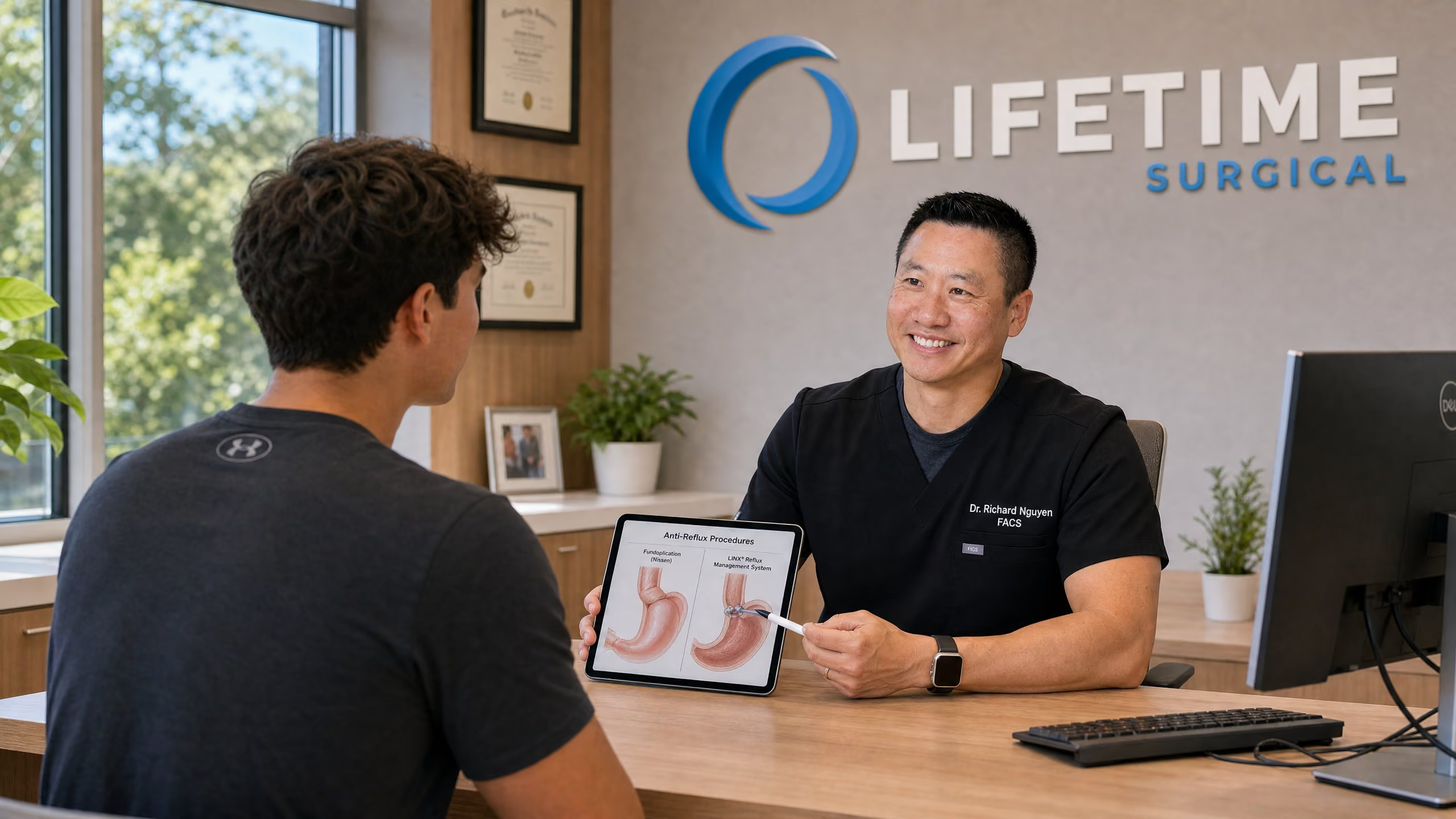
During a Nissen Fundoplication, the surgeon wraps the upper part of the stomach (the fundus) around the lower esophagus to create a new, functional valve. This 360-degree wrap reinforces the LES, preventing stomach acid from refluxing into the esophagus. If a hiatal hernia is present, it is repaired simultaneously by pulling the stomach back into the abdomen and tightening the opening in the diaphragm.
The primary advantage of Nissen Fundoplication is its proven, long-term efficacy. The vast majority of patients experience significant or complete relief from GERD symptoms and can discontinue their acid-suppressing medications. It is particularly effective for patients with large hiatal hernias or severe esophagitis.
However, the procedure is not without potential drawbacks. Because the new valve is a complete wrap, some patients may experience difficulty belching or vomiting, leading to a sensation of bloating or increased flatulence (gas bloat syndrome). Additionally, a small percentage of patients may experience temporary difficulty swallowing (dysphagia) as the swelling subsides.
The LINX Reflux Management System represents a significant advancement in the treatment of GERD. Approved by the FDA in 2012, LINX offers a less anatomically disruptive alternative to traditional fundoplication.
The LINX device is a small, flexible ring composed of interlinked titanium beads with magnetic cores. During a minimally invasive laparoscopic procedure, the surgeon places the LINX ring around the lower esophagus, just above the stomach. The magnetic attraction between the beads keeps the LES closed, preventing reflux. However, when the patient swallows, the force of the food or liquid breaks the magnetic bond, allowing the ring to expand and the contents to pass into the stomach. The ring then immediately closes again.
One of the most significant advantages of the LINX system is that it preserves the normal physiological function of the stomach. Unlike Nissen Fundoplication, LINX allows patients to belch and vomit normally, significantly reducing the risk of gas bloat syndrome. The procedure is also generally shorter and involves less alteration of the natural anatomy.
On the downside, LINX is not suitable for all patients. It is typically contraindicated for individuals with large hiatal hernias, severe esophagitis, or certain motility disorders. Additionally, while the device is designed to be permanent, it can be removed if necessary, though this requires another surgical procedure.
As we navigate 2026, the field of GERD surgery continues to innovate, offering patients even more refined options.
Robotic-assisted platforms have become increasingly prevalent in GERD surgeries, particularly for complex hiatal hernia repairs and Nissen Fundoplications. These systems provide surgeons with enhanced 3D visualization, greater dexterity, and improved precision, potentially leading to better outcomes and fewer complications.
TIF is an advanced endoscopic procedure that treats GERD without any external incisions. Using a specialized device inserted through the mouth and down the esophagus, the surgeon creates a partial wrap of the stomach around the lower esophagus, similar to a fundoplication but performed entirely from within. TIF is an excellent option for patients with mild to moderate GERD and small hiatal hernias who wish to avoid traditional surgery.
Recovery from GERD surgery varies depending on the specific procedure performed. For laparoscopic Nissen Fundoplication and LINX, most patients spend one night in the hospital and can return to light activities within a few days. Full recovery typically takes two to four weeks.
Dietary modifications are a crucial aspect of the recovery process. Patients are usually placed on a liquid or soft food diet for several weeks to allow the surgical site to heal and to minimize the risk of dysphagia. Gradually, solid foods are reintroduced under the guidance of the surgical team.
While GERD surgeries are generally safe and effective, they carry inherent risks, as with any surgical procedure. Potential complications include infection, bleeding, injury to surrounding organs, and adverse reactions to anesthesia. Specific risks related to GERD surgery include temporary or persistent dysphagia, gas bloat syndrome, and the potential need for a revision surgery if symptoms recur or the wrap slips.
Selecting the most appropriate GERD surgery option requires a comprehensive evaluation by a qualified surgeon. Factors to consider include the severity of your symptoms, the presence and size of a hiatal hernia, your esophageal motility, and your personal preferences regarding potential side effects and recovery times.
At Lifetime Surgical, we employ a multidisciplinary approach to ensure that each patient receives a personalized treatment plan tailored to their unique needs and goals.
If you are struggling with chronic GERD and are seeking a permanent solution, the advanced surgical options available in 2026 offer renewed hope for a life free from reflux. Don't let GERD dictate your quality of life any longer.
Contact Lifetime Surgical today to schedule a consultation with Dr. Richard Nguyen and explore the GERD surgery options that are right for you. Call us at 408-850-0176 or visit our contact us page to book your appointment.
Most minimally invasive GERD surgeries, such as Laparoscopic Nissen Fundoplication and LINX, take between one and two hours to complete. The exact duration depends on the complexity of the case and whether a hiatal hernia repair is also required.
The primary goal of GERD surgery is to eliminate the need for daily acid-suppressing medications. The vast majority of patients are able to discontinue their PPIs completely following a successful procedure.
Yes, the newer generation of LINX devices is considered MR Conditional, meaning patients can safely undergo Magnetic Resonance Imaging (MRI) scans up to 1.5 Tesla or 3.0 Tesla, depending on the specific model implanted. Always inform your healthcare provider that you have a LINX device before undergoing an MRI.
While GERD surgery is highly effective, there is a small risk that symptoms may return over time. This can occur if the surgical wrap loosens or if a new hiatal hernia develops. Regular follow-up appointments and adherence to lifestyle recommendations can help minimize this risk.
Wondering which surgical procedure might be right for your condition? We're here to help you understand your treatment options and develop a personalized surgical plan. Contact our office today to schedule a consultation.
Your path to improved health may be more achievable than you think—with advanced surgical techniques leading to faster recovery, reduced complications, and a significantly enhanced quality of life.
.avif)