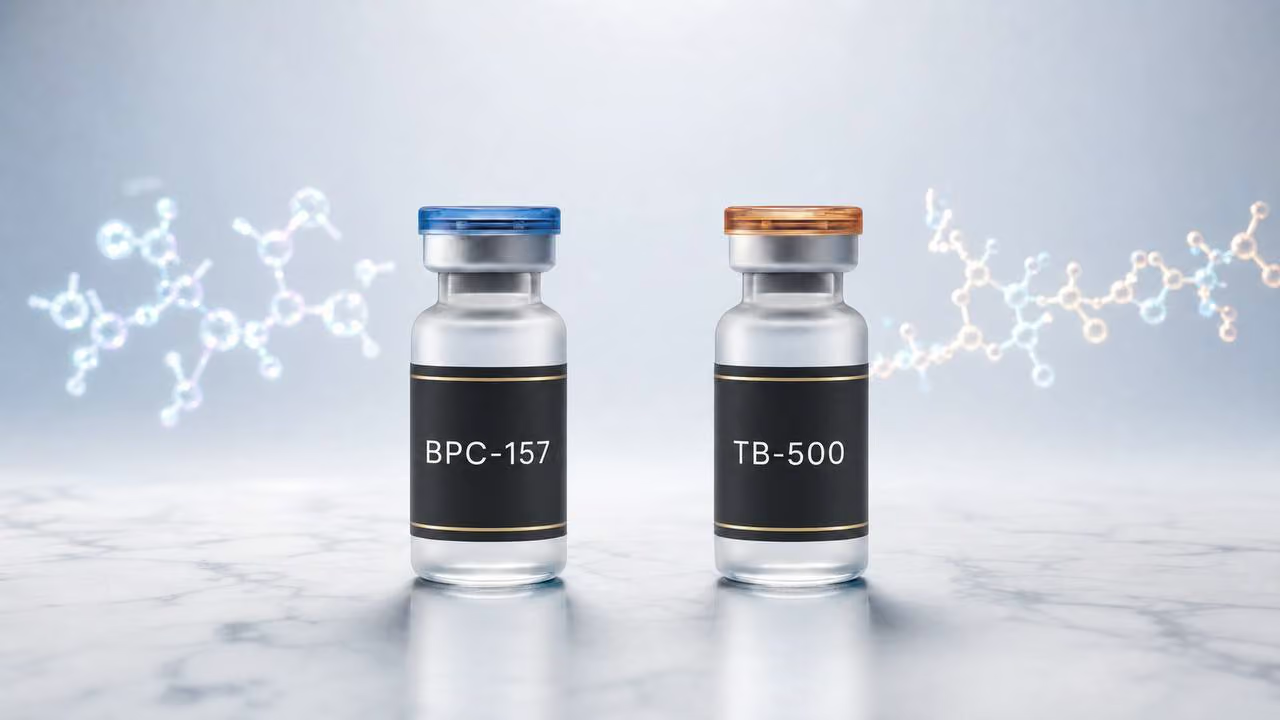
The landscape of regenerative medicine and peptide therapy is undergoing a significant transformation. For years, patients have relied on the therapeutic benefits of peptides to accelerate healing, manage inflammation, and optimize their overall health. However, upcoming regulatory shifts are poised to alter how these treatments are accessed and administered. Specifically, the FDA peptide regulations 2026 will introduce new classifications that directly impact some of the most widely used peptides in clinical practice today.
At Lifetime Surgical, we believe in empowering our patients with accurate, up-to-date information. As a premium surgical practice dedicated to advanced, evidence-based care, we understand that changes in medical regulations can cause uncertainty. This comprehensive guide is designed to demystify the FDA Category 2 peptide changes coming in 2026, focusing on what these updates mean for patients currently utilizing or considering therapies involving BPC-157, TB-500, KPV, MOTs-c, and GHK-Cu.
The FDA peptide regulations 2026 refer to the reclassification of several popular peptides, including BPC-157, TB-500, KPV, MOTs-c, and GHK-Cu, into Category 2 bulk drug substances. This change means compounding pharmacies will face stricter guidelines, potentially limiting patient access to these therapies unless they are prescribed under specific, FDA-approved conditions or clinical trials.
To fully grasp the implications of these regulations, it is essential to understand the framework the Food and Drug Administration (FDA) uses to evaluate and categorize bulk drug substances used in compounding. The FDA maintains lists of substances that can and cannot be used by compounding pharmacies under sections 503A and 503B of the Federal Food, Drug, and Cosmetic Act. Category 1 includes substances that are currently under evaluation but can still be compounded. Category 2 includes substances that raise significant safety or efficacy concerns, meaning they generally cannot be used in compounding unless specific criteria are met.
The shift of these specific peptides to Category 2 is a pivotal moment in regenerative medicine. It reflects the FDA's ongoing effort to ensure that all compounded medications meet rigorous safety and efficacy standards. While this regulatory oversight is designed to protect public health, it also means that patients and providers must navigate a more complex landscape to access these treatments.
Before delving into the specific changes, it is helpful to review why peptides have become such a cornerstone of modern regenerative therapies. Peptides are short chains of amino acids, the building blocks of proteins. Because they occur naturally in the body, they are highly specific in their functions, acting as signaling molecules that instruct cells on how to behave.
In surgical and recovery contexts, peptides are often utilized to enhance tissue repair, reduce postoperative inflammation, and support the body's natural healing mechanisms. At Lifetime Surgical, we integrate advanced modalities to ensure our patients achieve optimal outcomes following their procedures. Peptides have been a valuable tool in this integrative approach, offering targeted support that complements traditional surgical techniques.
The FDA peptide regulations 2026 specifically target several peptides that have gained immense popularity for their regenerative properties. Let's explore each of these peptides, their traditional uses, and how the new Category 2 classification will impact their availability.
BPC-157 is perhaps one of the most well-known peptides in the realm of tissue repair. Derived from a protein found in human gastric juice, BPC-157 has been extensively studied for its ability to accelerate the healing of tendons, ligaments, muscles, and even the gastrointestinal tract. It promotes angiogenesis—the formation of new blood vessels—which is crucial for delivering oxygen and nutrients to damaged tissues.
Under the new FDA peptide regulations 2026, BPC-157's move to Category 2 means that compounding pharmacies will face significant restrictions in producing it. The FDA has cited concerns over the lack of large-scale, randomized, placebo-controlled human trials demonstrating its safety and efficacy. For patients, this means that obtaining compounded BPC-157 will become exceedingly difficult, if not impossible, outside of approved clinical trials or specific FDA exemptions.
TB-500 is a synthetic version of Thymosin Beta-4, a naturally occurring peptide present in almost all human and animal cells. It plays a vital role in cellular migration, proliferation, and differentiation. In clinical practice, TB-500 is highly valued for its anti-inflammatory properties and its ability to promote rapid wound healing and tissue regeneration, particularly in muscle and connective tissue injuries.
Similar to BPC-157, TB-500 is being reclassified due to the FDA's requirement for more robust clinical data. The transition to Category 2 will severely limit the ability of compounding pharmacies to offer TB-500. Patients who have relied on this peptide for recovery from sports injuries or surgical procedures will need to consult with their healthcare providers to explore alternative, FDA-approved therapies that offer similar regenerative benefits.
KPV is a naturally occurring tripeptide known for its potent anti-inflammatory and antimicrobial properties. It is often used to manage conditions characterized by chronic inflammation, including inflammatory bowel disease (IBD), skin conditions like psoriasis, and systemic inflammatory responses. KPV exerts its effects by interacting with inflammatory signaling pathways within the cells, helping to restore homeostasis.
The inclusion of KPV in the Category 2 list under the FDA peptide regulations 2026 highlights the agency's cautious approach to peptides used for systemic inflammation. While KPV has shown promise in preliminary studies, the FDA requires more comprehensive data before allowing its widespread use in compounded medications. Patients utilizing KPV will need to transition to other anti-inflammatory management strategies under the guidance of their medical team.
MOTs-c is a unique peptide encoded by the mitochondrial genome rather than the nuclear DNA. It plays a critical role in regulating metabolic functions, improving insulin sensitivity, and promoting cellular energy production. MOTs-c has garnered attention for its potential in managing metabolic disorders, enhancing physical performance, and supporting healthy aging.
The FDA's decision to place MOTs-c in Category 2 stems from the need for further investigation into its long-term metabolic effects and safety profile. As the FDA peptide regulations 2026 take effect, access to compounded MOTs-c will be restricted. Patients focused on metabolic optimization will need to work closely with their physicians to identify alternative interventions, such as lifestyle modifications, FDA-approved medications, and other evidence-based therapies.
GHK-Cu is a naturally occurring copper complex that was first isolated from human plasma. It is renowned for its remarkable ability to stimulate collagen and elastin production, promote blood vessel growth, and reduce inflammation. GHK-Cu is widely used in both topical formulations for skin rejuvenation and injectable forms for systemic tissue repair and anti-aging benefits.
While topical applications of GHK-Cu in cosmetics may remain largely unaffected, the injectable and compounded forms will be subject to the new Category 2 restrictions. The FDA peptide regulations 2026 will limit the compounding of GHK-Cu for systemic use, requiring patients and providers to pivot toward FDA-approved alternatives for tissue regeneration and aesthetic enhancement.
Understanding the rationale behind the FDA peptide regulations 2026 is crucial for patients and providers alike. The FDA's primary mandate is to protect public health by ensuring that all drugs, including compounded medications, are safe and effective for their intended uses.
The rapid proliferation of peptide therapies in recent years has outpaced the traditional clinical trial process. Many of these peptides, while showing immense promise in preclinical studies and anecdotal reports, lack the large-scale, rigorous human trials required by the FDA for formal approval. By moving these substances to Category 2, the FDA is signaling that the current body of evidence is insufficient to guarantee their safety and efficacy when compounded in bulk.
Furthermore, the FDA has expressed concerns about the quality and purity of bulk drug substances sourced by some compounding pharmacies. Ensuring that patients receive medications free from contaminants and accurately dosed is a top priority. The stricter oversight introduced by the 2026 regulations aims to mitigate these risks, even if it means restricting access to certain therapies in the short term.
At Lifetime Surgical, our commitment to patient safety and exceptional outcomes remains unwavering. We understand that the FDA peptide regulations 2026 may cause concern for patients who have experienced the benefits of BPC-157, TB-500, KPV, MOTs-c, or GHK-Cu. However, we view these regulatory changes as an opportunity to refine our approach and ensure that all treatments we offer meet the highest standards of medical evidence.
If you are currently receiving peptide therapy or were considering it as part of your surgical recovery plan, here is what you need to know:
As the FDA peptide regulations 2026 phase out the compounded use of BPC-157, TB-500, KPV, MOTs-c, and GHK-Cu, it is important to recognize that the goals of these therapies—enhanced healing, reduced inflammation, and metabolic support—can still be achieved through other means.
For tissue repair and recovery, modalities such as Platelet-Rich Plasma (PRP) therapy and targeted nutritional support remain highly effective and fully compliant with FDA regulations. PRP utilizes your body's own concentrated platelets to deliver growth factors directly to the site of injury or surgery, promoting natural regeneration.
For managing inflammation, a combination of FDA-approved anti-inflammatory medications, advanced physical therapy, and lifestyle modifications can provide significant relief. Our team at Lifetime Surgical is adept at designing comprehensive recovery plans that address inflammation from multiple angles, ensuring a smooth and comfortable postoperative experience.
For metabolic support and anti-aging, we emphasize a holistic approach that includes optimized nutrition, hormone balancing (when clinically indicated and compliant), and evidence-based medical interventions. By focusing on the foundational pillars of health, we can help you achieve lasting vitality without relying on restricted substances.
While the FDA peptide regulations 2026 present immediate challenges for the use of specific peptides, the future of peptide therapy is far from over. The reclassification to Category 2 may serve as a catalyst for pharmaceutical companies and research institutions to invest in the rigorous clinical trials required for formal FDA approval.
If these trials successfully demonstrate the safety and efficacy of peptides like BPC-157 and TB-500, they could eventually return to the market as fully approved, standardized medications. This would provide patients with the assurance of FDA oversight, ensuring consistent quality and clear guidelines for use.
Until then, the medical community must adapt. At Lifetime Surgical, we are committed to staying at the forefront of medical advancements. We will continue to evaluate new, compliant therapies as they emerge, ensuring that our patients always have access to the safest and most effective treatments available.
The FDA Category 2 peptide changes coming in 2026 represent a significant shift in the landscape of regenerative medicine. The reclassification of BPC-157, TB-500, KPV, MOTs-c, and GHK-Cu underscores the FDA's commitment to safety and evidence-based practice. While these changes will restrict access to compounded versions of these peptides, they also ensure that the treatments patients receive are held to the highest standards of medical scrutiny.
At Lifetime Surgical, we are prepared to navigate these changes alongside our patients. Our premium, authoritative approach to surgical care and recovery means that we are always looking ahead, anticipating regulatory shifts, and adapting our protocols to provide the best possible outcomes. We believe that informed patients are empowered patients, and we are here to answer any questions you may have about how the FDA peptide regulations 2026 will impact your care.
If you have concerns about your current treatment plan or wish to explore FDA-compliant alternatives for surgical recovery and health optimization, we encourage you to reach out to our team. Together, we will ensure that your journey to optimal health remains safe, effective, and fully supported.
The FDA peptide regulations 2026 are expected to be fully implemented by the beginning of 2026. However, compounding pharmacies are already beginning to phase out the production of Category 2 peptides in anticipation of these strict enforcement deadlines. Patients should consult with their providers now to transition to alternative therapies.
Under the new regulations, obtaining compounded BPC-157 and TB-500 will become highly restricted. They will generally only be available if they are part of an FDA-approved clinical trial or if a specific exemption is granted. For the vast majority of patients, these peptides will no longer be accessible through standard compounding pharmacies.
Yes, there are numerous FDA-approved and compliant alternatives for tissue repair, inflammation management, and metabolic support. Modalities such as Platelet-Rich Plasma (PRP) therapy, targeted nutritional interventions, and approved medications can provide similar benefits. Your medical team at Lifetime Surgical will help identify the best alternatives for your specific needs.
The FDA moved these peptides to Category 2 primarily due to a lack of large-scale, randomized, placebo-controlled human trials demonstrating their safety and efficacy. The FDA requires robust clinical data to ensure that compounded medications do not pose significant risks to public health.
Lifetime Surgical is proactively reviewing all patient protocols and transitioning away from Category 2 peptides toward evidence-based, FDA-compliant alternatives. Our focus remains on delivering premium, safe, and effective surgical care and recovery plans tailored to each patient's unique health goals.
Navigating changes in medical regulations can be complex, but you don't have to do it alone. If you have questions about the FDA peptide regulations 2026 or want to discuss your surgical and recovery options, the expert team at Lifetime Surgical is here to help. We are dedicated to providing authoritative, patient-friendly care that prioritizes your safety and well-being.
Take the next step in your health journey by scheduling a consultation with Dr. Richard Nguyen and our experienced medical staff. Call us today at 408-850-0176 or visit our contact page to book your appointment. Let us help you achieve optimal outcomes with the highest standard of care.
Peptide, hormone, and longevity services are provided through Lifetime Performance Medicine, the wellness and longevity division of Lifetime Surgical, founded by Dr. Richard Nguyen and located in Los Gatos. If you would like to discuss whether any of these therapies are appropriate for your situation, you can book a consultation with Lifetime Performance Medicine.
Lifetime Performance Medicine is an affiliated practice under the same physician ownership. Any therapy discussed is subject to individual medical evaluation, and not all compounds discussed in this article are FDA-approved. Individual results vary.
Related care at Lifetime Surgical: Learn more about peptide therapy and surgical recovery with Dr. Richard Nguyen in San Jose & Los Gatos, or schedule a consultation.
Wondering which surgical procedure might be right for your condition? We're here to help you understand your treatment options and develop a personalized surgical plan. Contact our office today to schedule a consultation.
Your path to improved health may be more achievable than you think—with advanced surgical techniques leading to faster recovery, reduced complications, and a significantly enhanced quality of life.
.avif)